
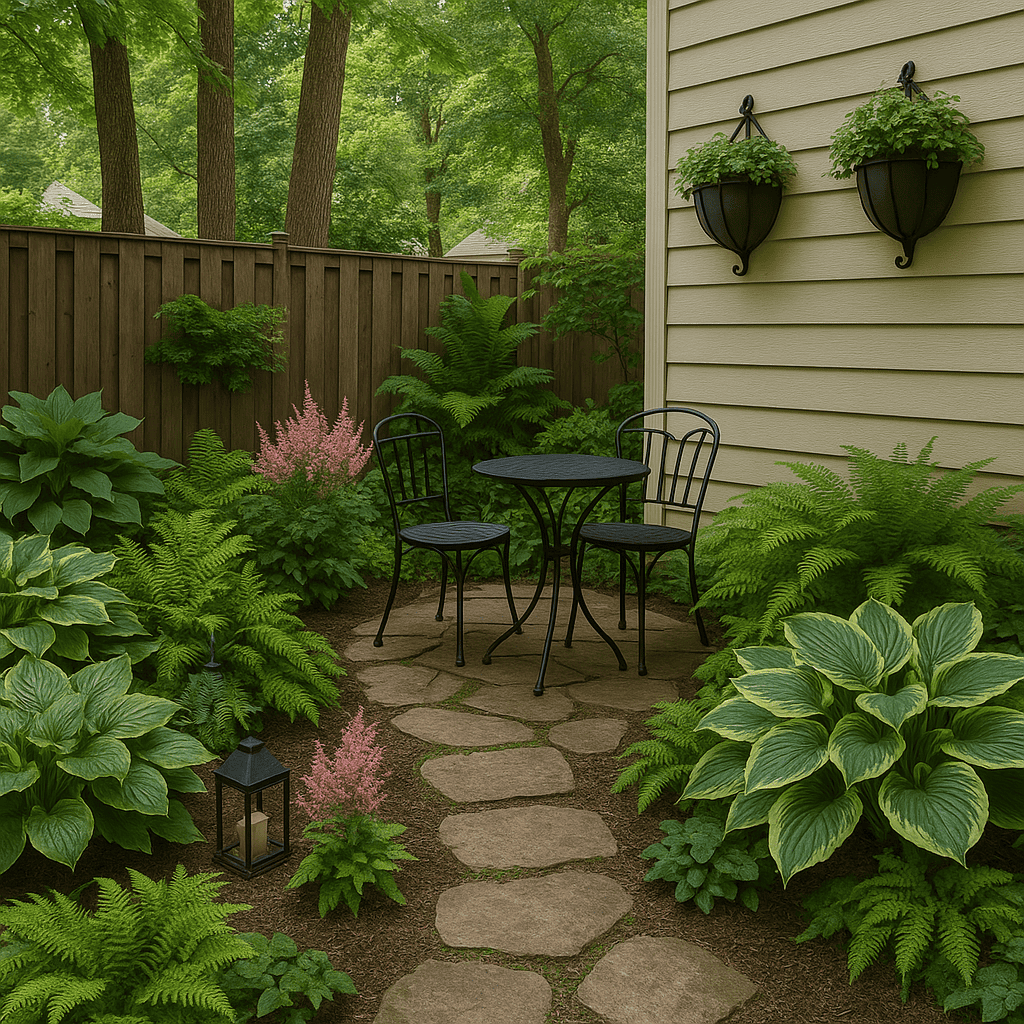
Shade Garden Ideas for Small Yards
Just because your garden is shady doesn’t mean it has to be dull. Whether you’re working with a north-facing side yard, beneath a canopy of trees, or in the shadows of a fence or house, there are creative ways to turn shady areas into lush, vibrant sanctuaries. This guide explores shade garden ideas for small yards that balance beauty, function, and smart plant selection.
Understanding Shade in Your Garden
Before planting, evaluate the type of shade in your space:
- Full shade: Less than 3 hours of direct sunlight per day. Found in dense tree canopies or shadowed courtyards.
- Partial shade: 3–6 hours of sunlight, usually filtered or only morning sun. Common near east-facing walls.
- Dappled shade: Intermittent light through trees. Offers a balance that supports a broad range of plants.
Identifying your specific shade condition ensures the plants you choose will thrive rather than struggle for light.
Top Shade-Loving Plants for Small Gardens
Smart plant selection is critical in shady areas. Here are tried-and-true favorites that deliver beauty without requiring full sun.
1. Hostas
- Size Range: Miniature to large varieties available
- Colors: Solid green, blue-toned, or variegated
- Notes: Performs best in moist, well-drained soil; slug resistant types available
2. Ferns
- Varieties: Lady fern, Japanese painted fern, ostrich fern
- Growth Style: Elegant, feathery texture with upright or arching forms
- Bonus: Thrive in low light and high humidity
3. Coral Bells (Heuchera)
- Foliage: Stunning in shades of red, plum, lime, and peach
- Bloom: Spring to early summer on delicate stalks
- Use: Ground cover or colorful filler in shady borders
4. Astilbe
- Height: 1–4 feet tall, depending on variety
- Colors: Pink, red, white, lavender
- Light Needs: Part to full shade with moist, rich soil
5. Tiarella (Foamflower)
- Foliage: Maple-like leaves with red-veined patterns
- Blooms: Springtime white/pale pink spires
- Bonus: Spreads gently to form a dense mat
Shade-Friendly Design Tips
1. Emphasize Texture and Leaf Shape
Shady gardens may have fewer flowers, so emphasize foliage variety:
- Pair bold leaves (hosta) with feathery forms (fern)
- Mix fine, coarse, and ruffled textures
- Repeat leaf forms to create unity
2. Use Color Strategically
Light is limited in shady spots, so amplify brightness:
- Choose variegated or silver-edged foliage
- Use white- or pale-colored blooms
- Add color through pots, painted fences, and garden art
3. Layer Your Planting
- Start with tall plants like astilbe or holly ferns at the back
- Mid-level plants like coral bells in the middle
- Finish with ground covers like tiarella or creeping Jenny
Layering maximizes vertical interest and prevents overcrowding.
4. Define with Pathways
- Use flagstone, gravel, or stepping stones to define movement
- Lighter materials reflect more light into shady zones
- Frame paths with low-growing plants or solar lights
5. Use Mirrors or Reflective Surfaces
- Mount mirrors on fences to bounce light and double the view
- Try reflective containers or polished metal garden art
This trick visually enlarges the space and brightens the overall garden.
Shade-Loving Plants for Containers
Containers offer flexibility for mobile design and limited-space gardens.
Best Shade Container Combinations:
- Thriller: Coleus or caladium for height and color
- Filler: Impatiens, begonias, or hostas
- Spiller: Creeping Jenny, trailing ferns, sweet potato vine
Use high-quality potting soil and ensure containers have drainage holes. Rotate containers to balance light exposure if needed.
Side Yard Shade Garden Ideas
Side yards often suffer from both narrow dimensions and full to partial shade. Here’s how to turn these forgotten zones into focal points:
- Create linear flow: Use stepping stones or a gravel path to guide visitors
- Wall-mounted planters: Save ground space while adding vertical greenery
- Artful moments: A ceramic stool, lantern, or wind chime adds personality
- Low-growing fillers: Tiarella, ajuga, or hellebores fill edges with texture
Even a 3-foot-wide strip can become a lush walkway or contemplative nook.
Low-Maintenance Tips for Shady Gardens
- Use mulch to retain moisture and suppress weeds
- Install drip irrigation or soaker hoses for consistent watering
- Choose perennials to reduce replanting efforts
- Avoid fast-spreading groundcovers that crowd out other species
- Prune tree limbs if more light is needed for understory growth
The goal is to create a garden that thrives with minimal input.
Related Reading
FAQs About Shade Garden Ideas for Small Yards
What’s the easiest shade plant to grow?
Hostas and ferns are two of the most forgiving plants for shade. They tolerate a wide range of soil types and require little care once established.
Can I grow flowers in full shade?
Yes. While fewer flowers bloom in deep shade, astilbe, tiarella, and impatiens do very well in these conditions.
How do I brighten up a shady garden?
Use silver or variegated foliage, white blooms, and light-colored garden accessories. Mirrors, reflective mulch, and bright planters can also enhance available light.
Turn your shady side yard or dark corner into a lush, cool retreat. Contact Yard and Soil for plant recommendations and layout ideas tailored to your space and lighting. We’ll help you bring calm, color, and structure to every shaded inch.
