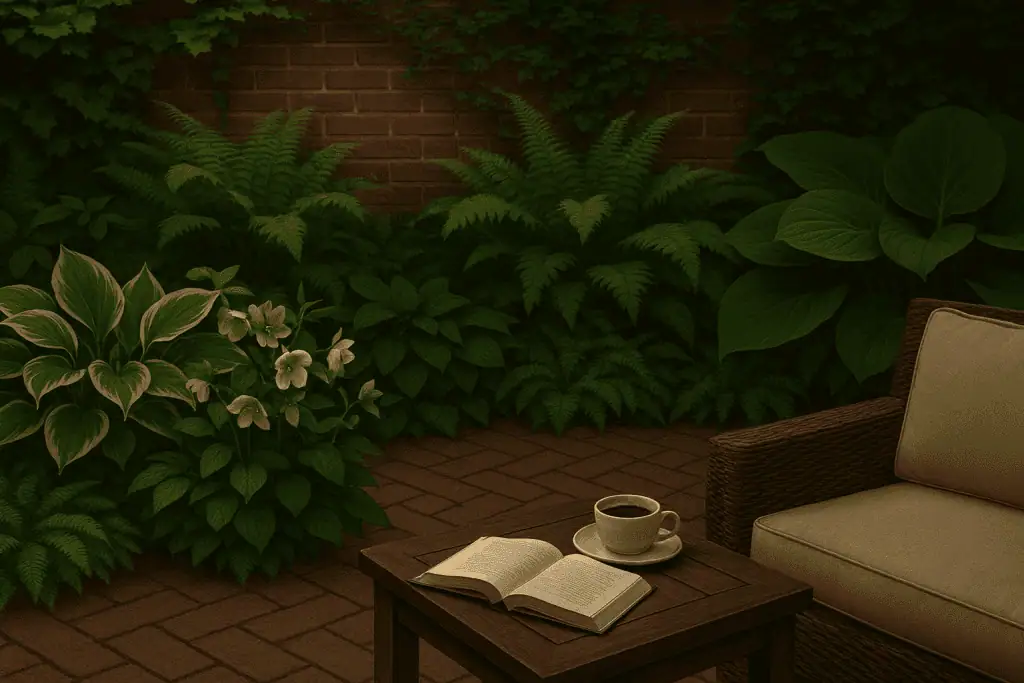
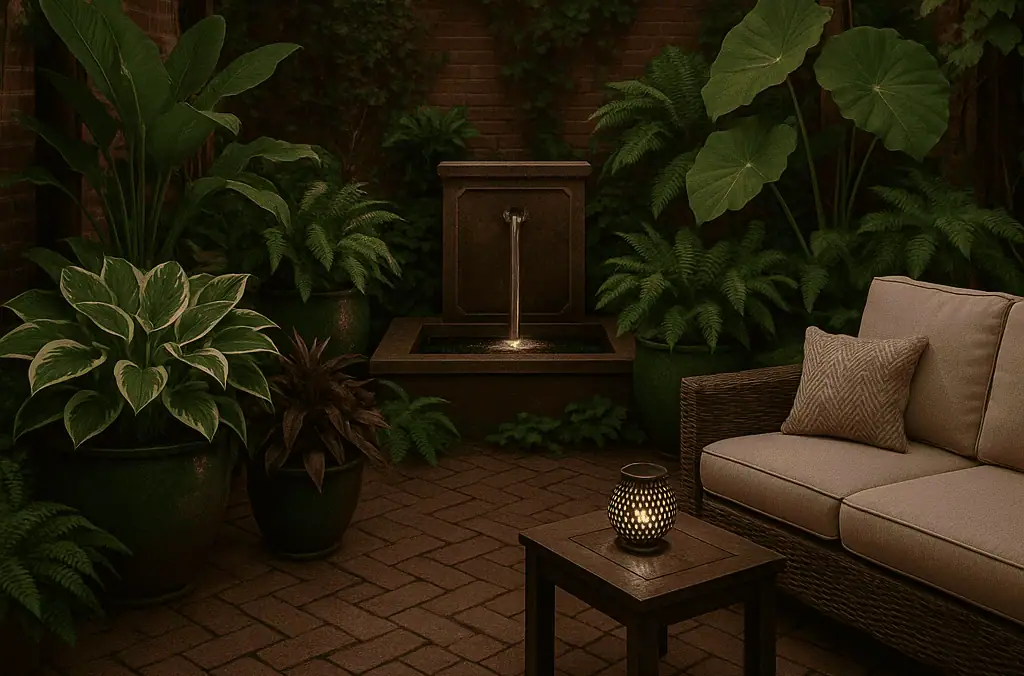
The best shade garden ideas start with the light you actually have. Match your plants to that light, then add structure: a seat, a path, layers of foliage and pale flowers that glow in low light. Ferns, hostas, hellebores, astilbe and coral bells do most of the work in a shade garden. They bring texture and color where the sun barely reaches.
This guide explains the kinds of shade and gives ten shade garden ideas you can mix and match. It ends with a table of reliable shade plants, with their sizes and USDA zones.
What kind of shade do you have?
"Shade" covers several different conditions. The University of Minnesota Extension sorts them by how many hours of direct sun a spot gets. Watch the area through a full day in summer, when the trees are in leaf, and note when sun falls on it.
| Kind of shade | What it means | What grows well |
|---|---|---|
| Part shade (light shade) | About 3 to 6 hours of direct sun a day. | The widest choice: astilbe, coral bells, hostas, bigleaf hydrangea and many flowering perennials. |
| Dappled shade | Sun filters through an open tree canopy, so patches of light move across the ground. | Woodland plants such as foamflower, hellebores, ferns and Solomon's seal. |
| Full shade | Less than 3 hours of direct sun a day. | Foliage first: ferns, hostas, lungwort, barrenwort and sweet woodruff. |
| Deep shade | Almost no direct sun, for example under dense evergreens or between buildings. | Very few flowers. Rely on ferns, sedges and ground covers. |
| Dry shade | Shade plus dry soil, usually under tree canopies, house eaves and overhangs that keep rain off the ground. | Tough plants such as barrenwort, Christmas fern, bigroot geranium and Pennsylvania sedge. |
Soil moisture matters as much as light. The Pennsylvania Horticultural Society notes that dense trees such as white pine and Norway spruce leave dry soil beneath them. A high, open tree such as honeylocust casts lighter, dappled shade and gives you more plant choices. Many shade plants want soil that stays moist, so check the ground before you plant.
10 shade garden ideas
Most of these ideas work in a yard of any size. Pick two or three that suit your space and build from there.
1. Make a seating nook
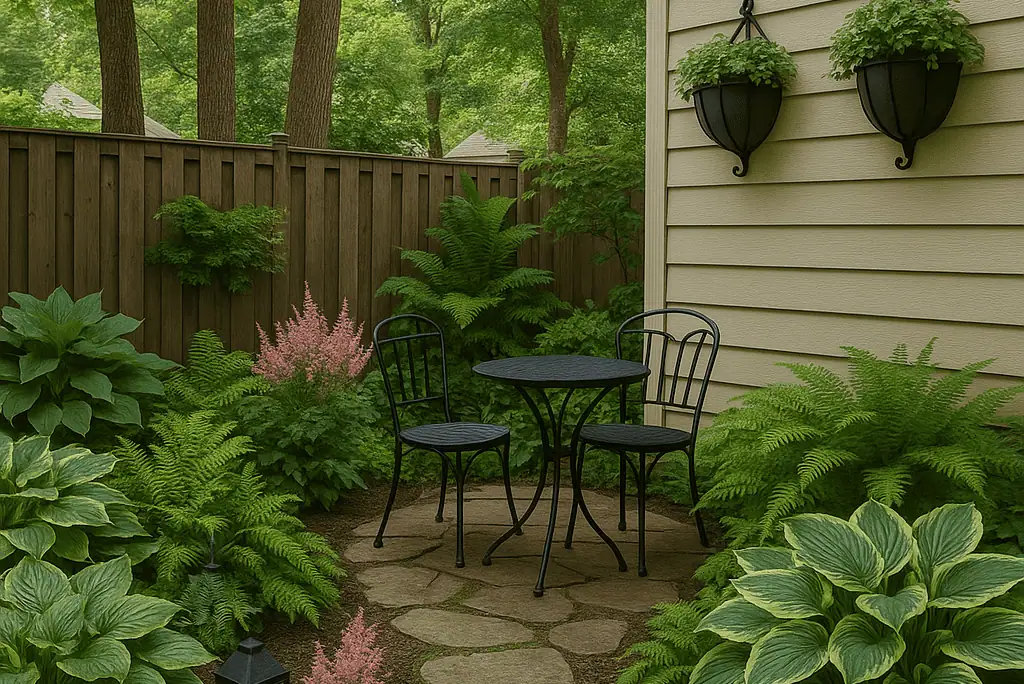
Shade is the most comfortable part of the yard on a hot afternoon, so give people a reason to sit there. A bench, two chairs or a small bistro set on a gravel or paver pad turns a dark corner into a place to visit. Surround the seat with ferns and hostas for a sense of enclosure. Bright cushions or a painted chair add color that does not depend on sunlight.
2. Lay a path through the shade
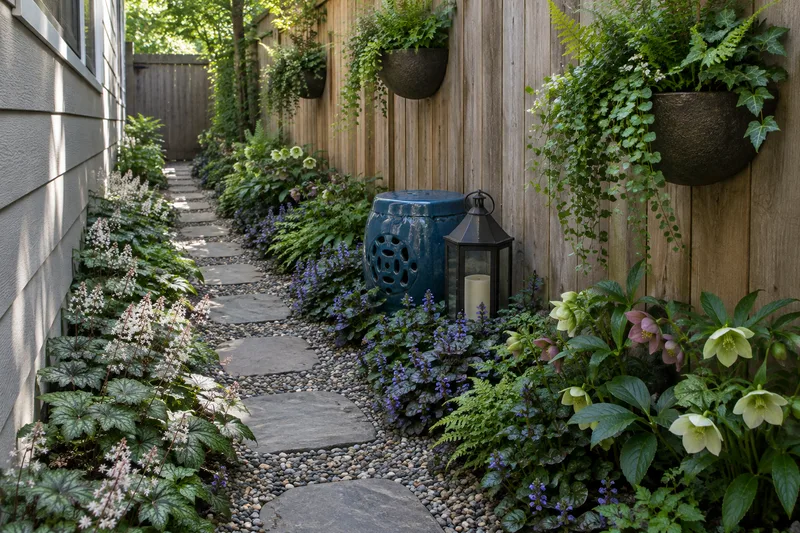
A path gives a shady area shape and draws people in. Stepping stones set in pebbles or pea gravel suit a woodland feel and let rain soak into the ground. Edge the path with low plants such as hellebores, foamflower or bugleweed so the line stays soft. In a narrow side yard, one run of stones with planting on both sides is often enough. Our shade garden ideas for small yards has more ideas for tight spaces.
3. Go for a woodland style
A woodland garden copies the layers of a forest edge: tree canopy, then shrubs, then perennials, then ground cover. Plant in drifts rather than single plants, and let ground covers knit between the larger plants. Native woodland plants such as wild ginger, foamflower, Christmas fern and Virginia bluebells suit this style. A curving path and a few mossy stones finish the look.
4. Use foliage for color
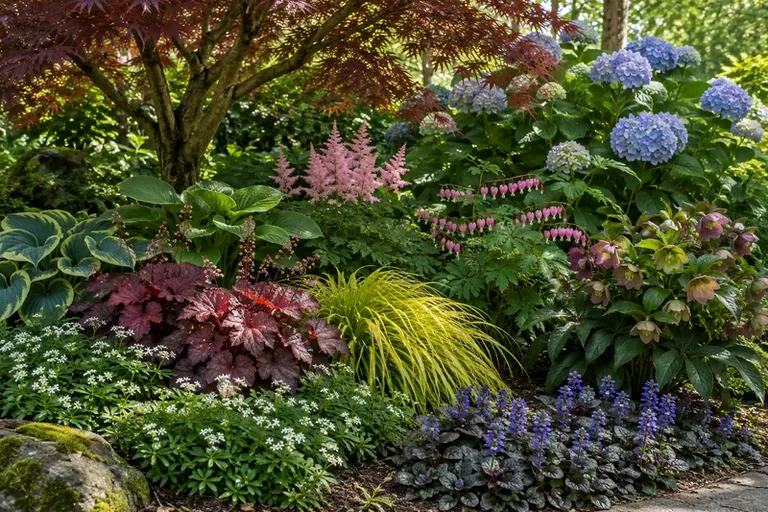
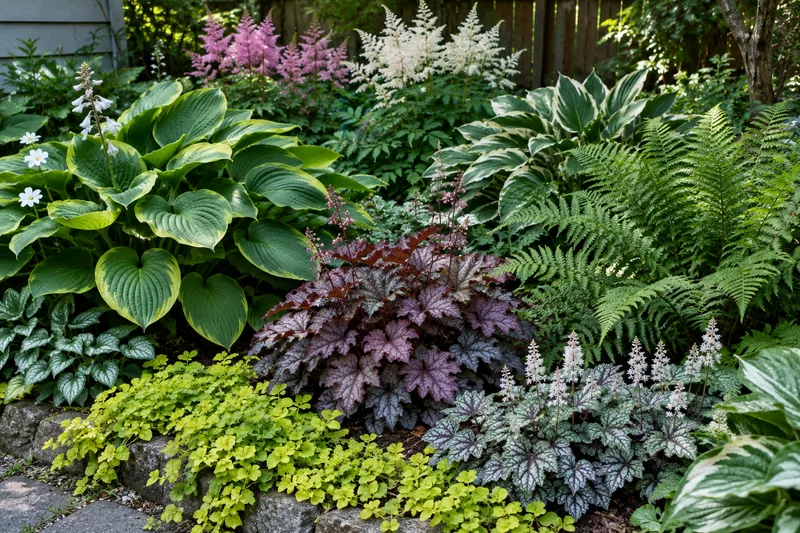
In shade, leaves do more work than flowers. Mix leaf colors and textures: blue-green and gold hostas, purple coral bells, silver-spotted lungwort, the silvery leaves of 'Jack Frost' brunnera and the gold forms of Japanese forest grass. Pair big, bold leaves with fine ones, such as hostas beside ferns. That contrast keeps an all-green garden from looking flat. For planting plans, see shade garden design inspiration.
5. Choose pale and bright flowers
White, cream, pale pink and soft yellow flowers stand out in low light, while very dark colors fade into the background. Astilbe, foamflower, Solomon's seal, white wood aster and bleeding heart all bring light-colored blooms to shady beds. Variegated leaves, edged or splashed with white or cream, do the same job all season.
6. Plant in layers under trees
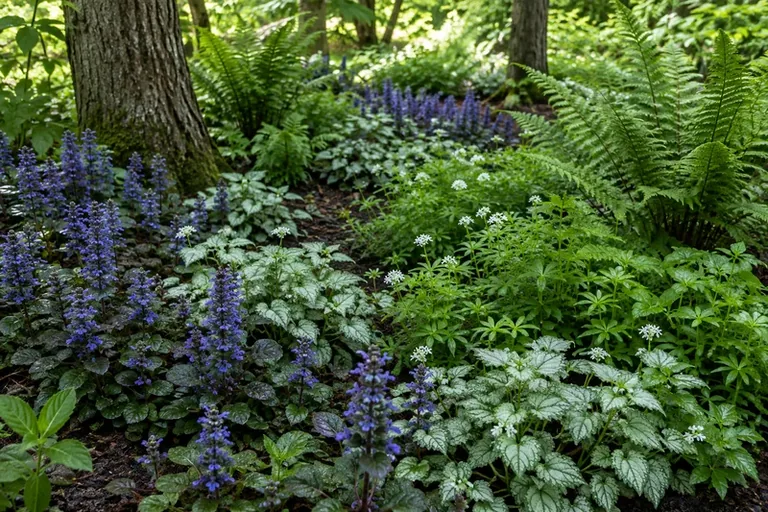
The ground under a tree is often both shady and dry, because the canopy blocks rain and tree roots take the water. Choose plants that tolerate dry shade, tuck them into pockets between roots, and avoid cutting large roots. Water new plants regularly through their first year while they settle in. Our guide to plants for dry shade under trees lists the toughest choices.
7. Fill early spring with blooms
Under deciduous trees, the ground gets more light in early spring, before the leaves open. Many shade plants flower in that window. Lenten rose, Virginia bluebells, lungwort, bleeding heart and barrenwort bloom from late winter into late spring. Virginia bluebells go dormant by midsummer, so plant ferns or hostas beside them to fill the gap later.
8. Use containers where roots get in the way
Where tree roots make digging hard, containers solve the problem. The University of Minnesota Extension suggests placing containers under trees or near shrubs to avoid root competition. Fill them with hostas, ferns, coral bells or shade-tolerant annuals, and move them as the light changes through the year.
9. Light the way
Soft lighting along a path or under a tree lets you enjoy a shade garden in the evening. White flowers and variegated leaves catch even low light well. See our landscape lighting design guide for where to place lights.
10. Swap thin lawn for ground cover
Lawn grass needs sun and often thins out in heavy shade. Shade-tolerant ground covers such as sweet woodruff, Pennsylvania sedge, barrenwort and bugleweed fill the space with far less fuss. Moss is another choice in damp, deeply shaded spots. Add stepping stones so you can still walk through.
Shade plants: a quick guide
These plants are reliable starting points for a shade garden. Sizes, light and zones come from the Missouri Botanical Garden Plant Finder. Find your zone on the USDA Plant Hardiness Zone Map, and read the plant tag, because cultivars vary.
| Plant | Light | Height | USDA zones | Why grow it |
|---|---|---|---|---|
| Hosta ('Sum and Substance') | Full sun to part shade | 2 to 3 ft | 3 to 8 | Bold leaves on a clump 3 to 5 ft wide |
| Japanese painted fern | Part to full shade | 1 to 1.5 ft | 3 to 8 | Silvery fronds; keep the soil moist |
| Christmas fern | Part to full shade | 1 to 2 ft | 3 to 9 | Native fern that tolerates dry soil |
| Ostrich fern | Part to full shade | 3 to 6 ft | 3 to 7 | Tall fronds for moist, damp spots |
| Astilbe ('Visions') | Part to full shade | 1 to 1.5 ft | 4 to 8 | Pink plumes in July and August |
| Lenten rose (hellebore) | Part to full shade | 1 to 1.5 ft | 4 to 9 | Flowers from late winter into spring |
| Bleeding heart | Part to full shade | 2 to 3 ft | 3 to 9 | Pink and white hearts in April and May |
| Brunnera ('Jack Frost') | Part shade | 1 to 1.5 ft | 3 to 8 | Silver leaves and small blue spring flowers |
| Coral bells ('Palace Purple') | Full sun to part shade | 1 to 2 ft | 4 to 9 | Purple leaves all season |
| Japanese forest grass | Part shade | 1 to 1.5 ft | 5 to 9 | Soft, arching grass for edges |
| Foamflower | Part to full shade | 9 to 12 in | 4 to 9 | White spring flowers; native ground cover |
| Barrenwort (Epimedium 'Sulphureum') | Part to full shade | 9 to 12 in | 5 to 9 | Yellow April flowers; handles dry shade |
| Lungwort | Part to full shade | 1 to 1.5 ft | 3 to 8 | Spotted leaves and blue spring flowers |
| Toad lily | Part to full shade | 2 to 3 ft | 4 to 8 | Spotted flowers in August and September |
| Sweet woodruff | Part to full shade | 6 to 12 in | 4 to 8 | Low ground cover with white spring flowers |
| Bigleaf hydrangea (shrub) | Part shade | 3 to 6 ft | 6 to 9 | Pink to blue flower heads in July and August |
For growing notes on more plants, see Best Plants for Shade Gardens. For blooms in every season, see Flowering Perennials for Shade.
Ferns and hostas: the backbone of a shade garden
Ferns and hostas suit almost every shade garden, and they pair well. Hostas give broad, solid leaves in blue, green, gold and variegated forms. Sizes run from small edging plants to large clumps such as 'Sum and Substance', which spreads 3 to 5 feet wide. The Missouri Botanical Garden lists deer as a problem for hostas, so plan for protection where deer visit.
Ferns add fine, airy texture. Choose them by moisture. Japanese painted fern and ostrich fern need soil that never dries out. Christmas fern and marginal wood fern are better picks for drier woodland soil. Planted together, hostas and ferns make a full, layered bed with very little upkeep.
Common questions about shade gardens
What grows in full shade?
Foliage plants do best: ferns, hostas, lungwort, barrenwort, sweet woodruff and wild ginger. Flowers are fewer in full shade, so lean on leaf color and texture.
Can a shade garden have flowers?
Yes. Hellebores, bleeding heart, astilbe, foamflower, toad lily and white wood aster all flower in shade. Spread them across the seasons so something is in bloom from late winter to fall.
How do I plant under a tree without harming it?
Use small plants and dig small holes between roots rather than one large bed. Avoid cutting thick roots and avoid piling deep new soil over the root zone. Water the new plants until they are established.
More guides on Yard and Soil
- Plants for Dry Shade Under Trees: tough plants for the hardest spot in the yard.
- Best Plants for Shade Gardens: more shade plants with growing notes.
- Shade Garden Design Inspiration: layouts, plant palettes and textures.
- Shade Garden Ideas for Small Yards: side yards, corners and narrow beds.
- Flowering Perennials for Shade: shade perennials that bloom, season by season.
- Perennials: all of our perennial guides in one place.
Sources
- University of Minnesota Extension, Gardening in the shade.
- Pennsylvania Horticultural Society, Shade Garden Ideas: Best Plants and Design Tips for Shady Spaces.
- Missouri Botanical Garden, Plant Finder (plant sizes, light, bloom times and zones).
- Utah State University Extension, Landscaping in Dry Shade.
- USDA Agricultural Research Service, USDA Plant Hardiness Zone Map.