
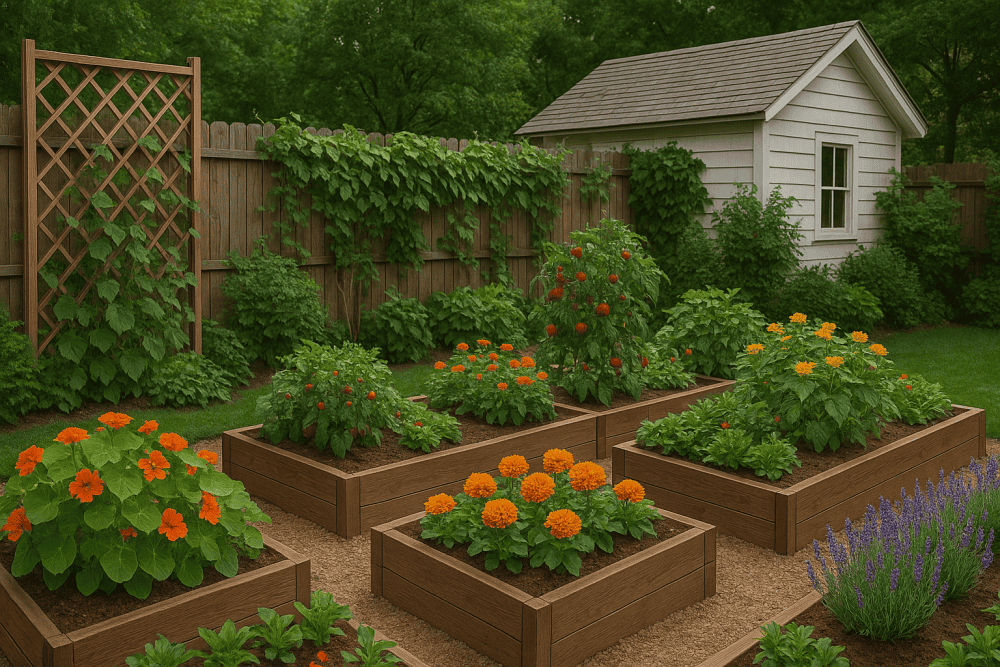
Companion Planting for Raised Bed Gardening Success
Table of Contents hide
Raised bed gardening is a favorite among home gardeners because it improves soil quality, reduces weeds, and makes planting easier. But to unlock their full potential, raised beds benefit from companion planting strategies that optimize space, deter pests, and boost harvests.
Why Raised Beds Pair Well with Companion Planting
Raised beds allow for controlled soil conditions, making them ideal for companion planting. The defined space encourages thoughtful planning, ensuring plants with complementary needs share the same bed. This method supports healthier crops, maximizes yields, and reduces pest issues naturally.
1. Maximize Space with Vertical Companions
Raised beds often have limited room, so vertical planting is key. Pair climbing crops like pole beans with corn, which acts as a natural trellis. Use cucumbers on trellises alongside radishes, which grow quickly beneath them. This layered approach conserves space while boosting productivity.
2. Improve Soil with Nitrogen-Fixing Plants
Legumes such as peas and beans enrich the soil by fixing nitrogen, making them excellent companions for heavy feeders like lettuce and spinach. Rotating legumes through your beds ensures ongoing fertility. The USDA Gardening Resources offer more insights on soil management.
3. Use Herbs to Deter Pests Naturally
Basil, chives, and parsley repel common garden pests like aphids, mosquitoes, and beetles. Plant them near tomatoes, peppers, and carrots for maximum impact. Herbs thrive in raised beds, where well-drained soil enhances their aromatic oils.
4. Pair Quick Growers with Long-Season Crops
Fast-growing crops like radishes and lettuce can be interplanted with slower crops such as broccoli or tomatoes. By the time the larger plants need more room, the quick crops have already been harvested.
5. Attract Pollinators with Companion Flowers
Flowers like marigolds, nasturtiums, and calendula not only beautify raised beds but also attract pollinators and beneficial insects. These blooms keep your crops healthy and productive. See our Flowering Plants guide for inspiration.
6. Rotate Crops for Soil Health
Even in raised beds, rotating plant families is essential. Avoid planting the same crops in the same spots each year to prevent soil depletion and reduce disease risks. Our Seasonal Planting Guides can help you map rotations effectively.
7. Plan for Root Depth Compatibility
Raised beds are shallow compared to traditional gardens, so consider root depths. Pair shallow-rooted greens with deep-rooted carrots or beets to maximize space and reduce nutrient competition.
With careful companion planting, your raised beds can deliver bigger harvests, healthier plants, and less pest pressure. Pairing crops thoughtfully ensures every inch of space contributes to a thriving, sustainable garden.
For more raised bed tips, explore Raised Bed Gardening, Seasonal Planting Guides, and Flowering Plants.
