
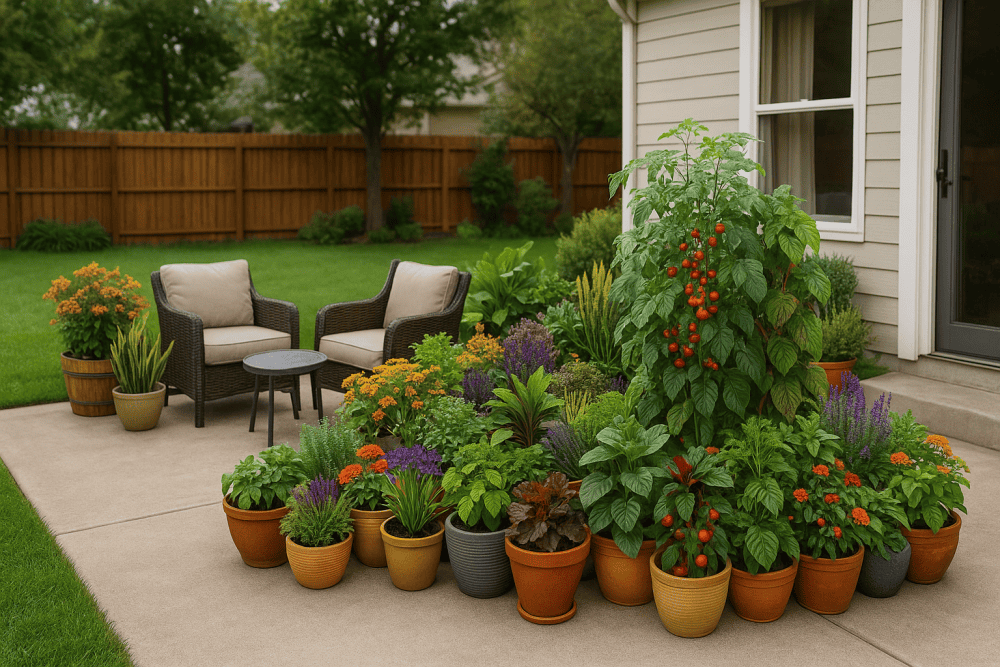
How to Design a Stunning Container Garden with Mixed Plants
Table of Contents hide
A well-designed container garden doesn’t just grow plants; it creates an inviting retreat, full of texture, color, and productivity. By mixing flowers, herbs, vegetables, and foliage, you can design a container garden that’s both visually stunning and functional. Whether you’re working with a balcony, patio, or porch, this guide shows you how to create container arrangements that wow.
Why Choose Mixed Container Gardens?
Mixed container gardens bring together the best of beauty and utility. Combining ornamental plants with edibles and herbs provides:
- Visual appeal: Layers of textures, colors, and bloom times.
- Pest resistance: Strategic combinations deter unwanted insects naturally.
- Pollinator support: Flowers attract bees and butterflies that benefit vegetables.
- Efficient use of space: Multiple crops share a single container.
They’re an ideal choice for small-space gardeners who want abundance without clutter.
1. Start with the Right Container
A stunning mixed container starts with the right base. Choose containers large enough to support multiple plants, at least 18–24 inches wide for most designs. Select durable materials like resin, ceramic, or wood. For balconies, use lightweight materials such as fabric grow bags or plastic. Ensure proper drainage with multiple holes. For container selection tips, visit Choosing the Right Containers for Healthy Plant Growth.
2. Follow the Thriller, Filler, Spiller Formula
One of the most effective design strategies for mixed containers is the “Thriller, Filler, Spiller” approach:
- Thriller: A tall, eye-catching centerpiece plant such as ornamental grasses, dwarf tomatoes, or small shrubs.
- Filler: Medium-height plants like basil, lettuce, or marigolds to fill in around the centerpiece.
- Spiller: Trailing plants such as nasturtiums, strawberries, or ivy that cascade over the container edges.
This layering adds depth and ensures the container looks lush from every angle.
3. Balance Colors and Textures
Consider both foliage and flowers when mixing plants. Pair bold, vibrant blooms like geraniums with soft, airy plants like dill or fennel. Contrast leafy greens such as kale with delicate blossoms like violas. Adding silver-foliage plants such as dusty miller provides brightness that complements colorful flowers.
4. Mix Edibles and Ornamentals
Why settle for only beauty when you can have both beauty and function? Mix vegetables like peppers with marigolds, or kale with pansies. Edible flowers such as nasturtiums or violas provide both decoration and garnish for meals. Learn more ideas in Edible Container Gardens: Growing Vegetables in Small Spaces.
5. Choose Plants with Similar Needs
To ensure success, select plants that share similar sun, water, and soil requirements. For sunny balconies, combine tomatoes, basil, and marigolds. For shady patios, mix ferns, impatiens, and mint. Grouping plants by needs prevents stress and keeps the container thriving.
6. Stagger Bloom and Harvest Times
Design your container so something is always in bloom or ready to harvest. Pair spring flowers with summer vegetables, or quick-growing radishes with slow-maturing peppers. This staggered approach ensures a container garden that stays lively and productive throughout the seasons. Use our Seasonal Planting Guides for timing.
7. Incorporate Pollinator-Friendly Plants
Mixed containers become even more valuable when they attract pollinators. Lavender, echinacea, and bee balm bring bees and butterflies that increase vegetable yields. For region-specific suggestions, see the National Wildlife Federation: Pollinator Gardens.
8. Add Decorative Accents
Don’t forget finishing touches. Mulch with decorative stones, add small trellises for climbing beans, or place decorative stakes for charm. These accents make your mixed container a true centerpiece of your outdoor space.
With the right balance of beauty and utility, mixed container gardens transform patios and balconies into lush, colorful sanctuaries. By combining the “Thriller, Filler, Spiller” method with thoughtful plant choices, you’ll design containers that are as stunning as they are productive.
For more inspiration, explore Container Garden Ideas, Small Garden Ideas, and Seasonal Planting Guides.
