
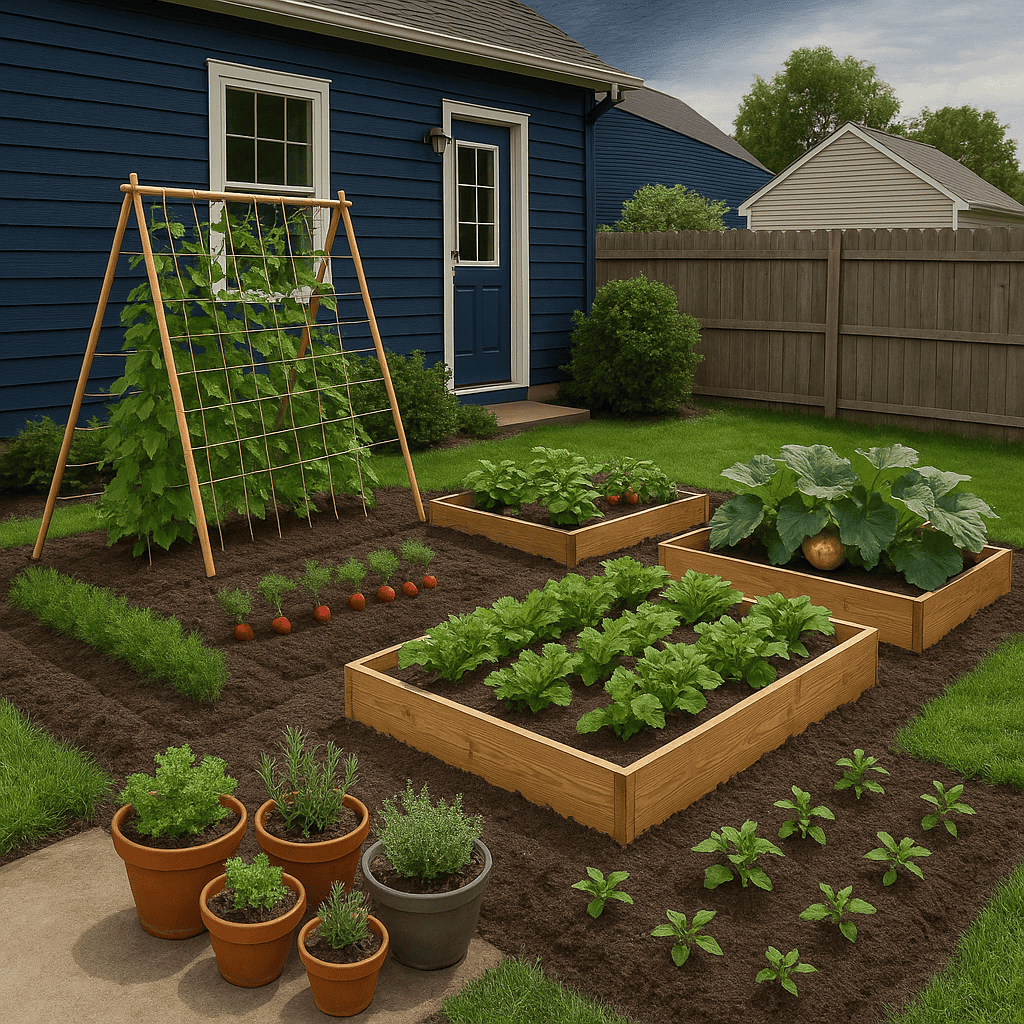
Backyard Vegetable Garden Layout Design
Designing a backyard vegetable garden layout that's both productive and visually appealing can be the key to consistent harvests and garden satisfaction. Whether you're new to gardening or looking to improve your setup, thoughtful planning ensures your edible garden is easy to manage, maximizes space, and brings beauty to your backyard. In this guide, we'll walk you through backyard vegetable garden layout designs that work in a variety of spaces, from tiny urban plots to full-scale suburban yards.
Why Garden Layout Planning Matters
A well-planned layout:
- Maximizes growing space
- Supports healthy plant growth
- Makes watering, harvesting, and maintenance easier
- Reduces pest and disease problems
- Increases yields through companion planting and sun optimization
Whether you're planning in-ground beds, raised beds, or containers, the layout is where your success begins.
Step 1: Assess Your Space and Conditions
Before sketching a plan, evaluate:
- Sunlight: Most vegetables need 6-8 hours of direct sun daily
- Soil: Test for fertility, pH, and drainage
- Water access: Consider proximity to a hose or spigot
- Wind exposure: Use fencing or shrubs as windbreaks if needed
- Pests: Identify local threats like deer, rabbits, or aphids
Taking stock of your environment ensures you plan for success, not setbacks.
Step 2: Choose a Garden Layout Style
1. Traditional Row Garden
- Straight rows with paths between
- Easy to till, weed, and harvest
- Best for large backyard spaces
2. Raised Bed Garden
- Structured boxes, often 4x4 or 4x8 ft
- Improved drainage and soil control
- Keeps weeds down and soil warm
3. Square Foot Garden
- Divide beds into 1-foot squares
- Great for beginners and small spaces
- Maximizes yield with companion planting
4. Keyhole Garden
- Circular bed with a compost bin in the center
- Popular in permaculture and arid climates
- Conserves water and nutrients
5. Container Vegetable Garden
- Use pots, buckets, and planters
- Ideal for patios, balconies, or compact yards
- Mobile and easy to manage
Step 3: Decide What to Grow
Focus on crops that:
- Thrive in your climate zone
- Are eaten frequently in your household
- Offer high yield per square foot (e.g., leafy greens, tomatoes, beans)
- Grow vertically to save space (e.g., cucumbers, pole beans, peas)
Easy Vegetables for Beginners:
- Lettuce
- Radishes
- Bush beans
- Zucchini
- Carrots
- Cherry tomatoes
Step 4: Map Your Beds
Raised Bed Sample Layout:
| Bed 1 | Bed 2 |
|---|---|
| Tomatoes | Lettuce |
| Basil | Radishes |
| Marigolds | Carrots |
Companion Planting Tips:
- Tomatoes + Basil + Marigolds: Pest control + flavor boost
- Beans + Corn + Squash: Classic "Three Sisters" guild
- Carrots + Onions: Reduce carrot fly
Use these groupings to guide your planting blocks and improve success.
Step 5: Plan Paths and Access
- Leave 18-24 inches between beds for easy access
- Use mulch, gravel, or pavers to reduce weeds
- Avoid compacting soil by walking inside beds
- Create zones for tools, compost, or work tables
Step 6: Consider Watering and Irrigation
- Soaker hoses or drip irrigation: Efficient, deep watering
- Timers: Automate watering to avoid forgetting
- Rain barrels: Sustainable watering solution
Grouping crops by water needs saves time and conserves resources.
Step 7: Optimize for Success Throughout the Seasons
- Spring: Start with leafy greens, radishes, and peas
- Summer: Focus on heat-lovers like tomatoes, peppers, squash
- Fall: Replant with kale, carrots, beets
Stagger your plantings for continual harvests and use cold frames or row covers to extend the season.
Design Additions for Beauty and Function
- Trellises: Add vertical interest and space efficiency
- Garden arches: Support climbing plants and define entryways
- Raised bed edging: Use stone or wood for tidy borders
- Garden art: Sculptures, signs, or wind chimes for personality
Common Garden Layout Mistakes to Avoid
- Overcrowding plants
- Ignoring mature plant size
- Failing to rotate crops yearly
- Forgetting to label plantings
- Skipping compost or organic matter
Related Reading
FAQs About Backyard Vegetable Garden Layout
What's the best layout for a beginner?
Raised beds with a square foot layout are easy to manage and limit weeding. Pair with drip irrigation for low-maintenance success.
How many vegetables can I grow in a small space?
Using vertical supports and high-yield crops, you can grow a surprising amount. Plan intensively and use succession planting.
How do I keep pests out of my vegetable garden?
Use fencing, floating row covers, and companion plants like marigolds and garlic. Keep compost bins covered and rotate crops yearly.
Want help designing a backyard garden layout that fits your space and harvest goals? Contact Yard and Soil and we'll help you turn your backyard into an edible paradise that feeds your home and your soul.