
Backyard Garden Layout Ideas for Every Size Yard
Designing a backyard garden can be one of the most rewarding and transformative projects for your outdoor space. Whether you’re working with a compact urban backyard or a sprawling suburban lot, the key is creating a garden layout that suits your lifestyle, supports your climate, and makes the most of your space. This comprehensive guide explores backyard garden layout ideas for small, medium, and large yards, helping you create a beautiful, productive, and functional outdoor haven.
Why Your Garden Layout Matters
Your garden’s layout influences everything — from how you move through the space to how well your plants grow. A smart layout:
- Improves accessibility and ease of maintenance
- Enhances visual balance and curb appeal
- Optimizes sun and water exposure
- Supports healthy plant growth and seasonal rotation
- Creates distinct zones for relaxation, utility, and beauty
With intentional planning, even the smallest yard can become a multi-functional retreat.
Garden Layout Basics: What to Consider First
Before sketching out beds or placing furniture, take inventory of:
- Sun exposure: Track how sunlight moves across your yard during the day
- Soil quality: Test for drainage, pH, and fertility
- Water access: Identify spigot locations or irrigation lines
- Existing features: Trees, fences, patios, and utility boxes
- Desired functions: Entertaining, growing vegetables, relaxing, play areas, etc.
A well-thought-out layout balances your goals with your landscape’s natural conditions.
Layout Ideas for Small Backyards
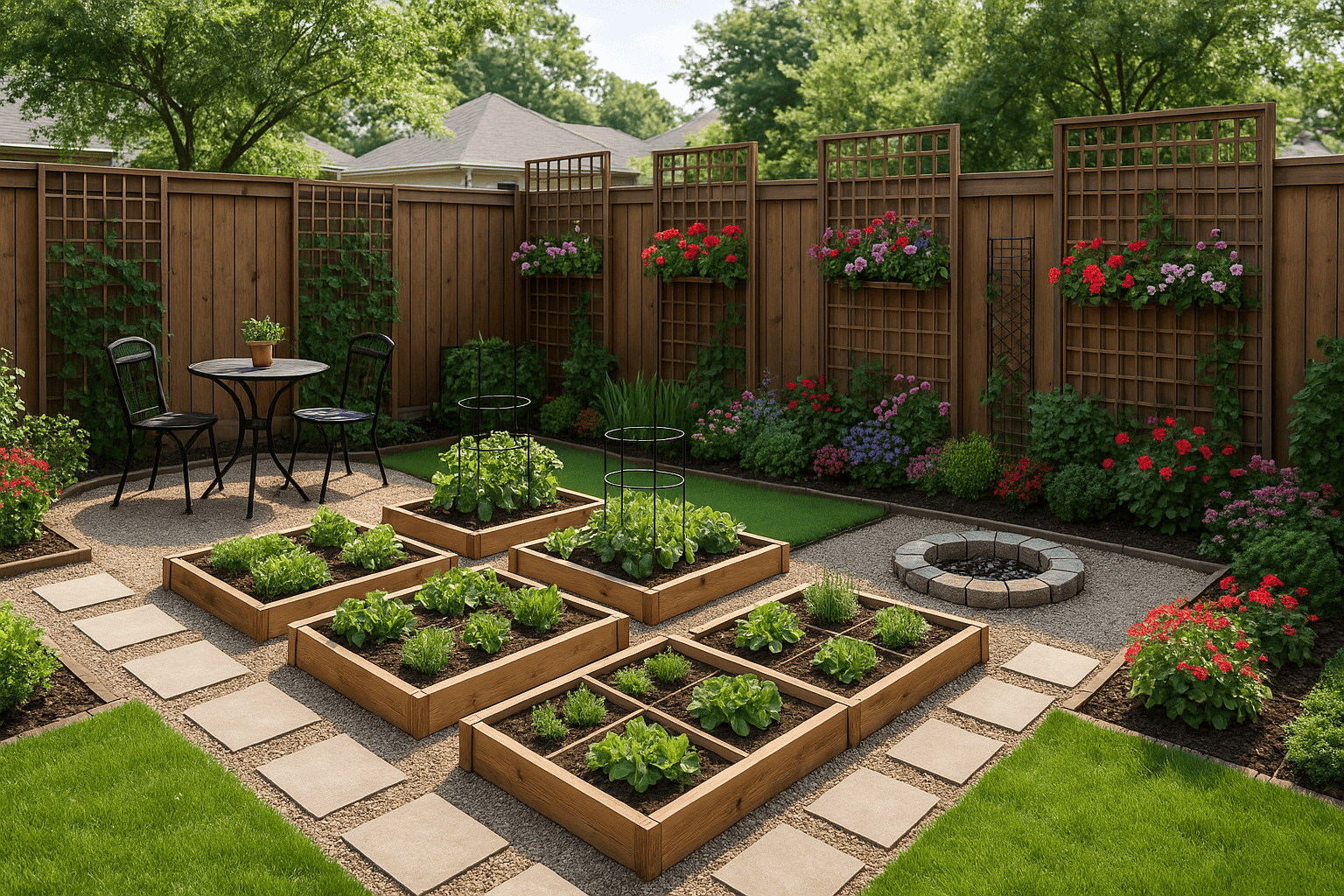
1. Raised Bed Grid Layout
- Use a 4x4 or 4x8 raised bed grid system
- Leave 2–3 feet between beds for easy access
- Line pathways with gravel or mulch to reduce weeds
- Perfect for veggies, herbs, and compact flowering plants
2. Vertical and Corner Utilization
- Add trellises, shelves, and wall planters along fences
- Use corners for built-in seating with under-bench storage
- Install a wall fountain or art to create a focal point
3. Integrated Furniture + Planters
- Use multi-functional benches that double as containers
- Choose a bistro table set that folds flat when not in use
- Include planters along deck railings or stair edges
4. Side Yard Pass-Through Garden
- Turn narrow walkways into lush corridors with:
- Stepping stones
- Narrow raised beds
- Tall vertical plantings like bamboo or ornamental grasses
Layout Ideas for Medium-Sized Backyards
1. Central Lawn + Border Beds
- Frame a small lawn with wide planting beds
- Add a curved edge for natural flow
- Use layers: tall shrubs in back, mid-height perennials in middle, groundcovers in front
2. Garden Room Concept
- Divide space into zones:
- Dining area
- Vegetable garden
- Flower beds
- Hammock nook or firepit
- Use hedges, trellises, or decorative screens to define rooms
3. Geometric Raised Bed Layout
- Arrange beds in a cross or grid with a central focal point
- Incorporate seating in the center for 360-degree garden views
- Ideal for edible + ornamental garden combinations
4. Water Feature + Wildlife Zone
- Install a small pond or bubbling fountain
- Surround with pollinator plants and native grasses
- Add logs or stones for butterflies, bees, and birds
Layout Ideas for Large Backyards
1. Multi-Zone Permaculture Layout
- Designate zones:
- Orchard
- Edible annual beds
- Compost area
- Chicken coop or greenhouse
- Use swales or rain gardens to manage water flow
2. Classic English-Style Garden Rooms
- Use hedges or espaliered trees to divide garden spaces
- Incorporate winding paths, arbors, and secluded seating
- Mix roses, herbs, and formal parterres
3. Large Format Patio + Entertaining Space
- Create a central hardscaped area with:
- Dining table
- Outdoor kitchen or grill
- Lounge zone with fire bowl
- Flank with beds or potted trees for privacy
4. Formal Symmetry Layout
- Symmetrical pathways lead to a sculpture, fountain, or tree
- Beds mirror each other on either side
- Works well with classic or modern minimalist styles
Planting Strategies for Functional Layouts
- Use companion planting: Pair veggies, herbs, and flowers that benefit each other
- Rotate crops: Prevent soil depletion and pest buildup
- Grow vertically: Use arbors, teepees, or obelisks for climbing plants
- Group by water needs: Reduces overwatering and waste
Design Tips to Maximize Space
- Use diagonal lines: Makes small spaces appear larger
- Color blocking: Group similar colors for strong visual impact
- Curved paths: Create a sense of discovery
- Layered planting: Adds depth, even in flat yards
- Mirrors or shiny surfaces: Reflect light and expand views
Hardscaping Considerations
- Gravel paths: Low-cost and great drainage
- Stepping stones: Add charm and guide foot traffic
- Raised beds: Define structure and improve soil
- Built-in seating: Saves space and doubles as storage
- Lighting: Solar stake lights, string lights, or uplights for mood and safety
Garden Layout Mistakes to Avoid
- Overcrowding plants
- Ignoring mature size of trees/shrubs
- Poor irrigation planning
- No clear flow or pathways
- Lack of seating or shade
Sample Layout Sketches to Try
- 4x4 Square Raised Bed Garden: Ideal for beginners
- L-Shape Flower Border with Central Lawn
- Entertaining Courtyard with Potted Edibles
- Kid’s Play Area + Butterfly Garden Hybrid
Related Reading
FAQs About Backyard Garden Layout Ideas
What’s the best layout for a small backyard garden?
Use raised beds, vertical planters, and furniture with storage. Keep walkways clear and group plants by size.
Can I have a vegetable garden and flowers in the same layout?
Absolutely! Use separate beds or companion plant flowers with veggies to attract pollinators and deter pests.
How do I plan for shade and sun?
Track sun patterns for a few days. Place sun-loving plants in the brightest areas and use structures to provide shade where needed.
Want a layout plan tailored to your space and goals? Contact Yard and Soil and we’ll help you design a garden that’s functional, beautiful, and sustainable — no matter the size of your yard.
