
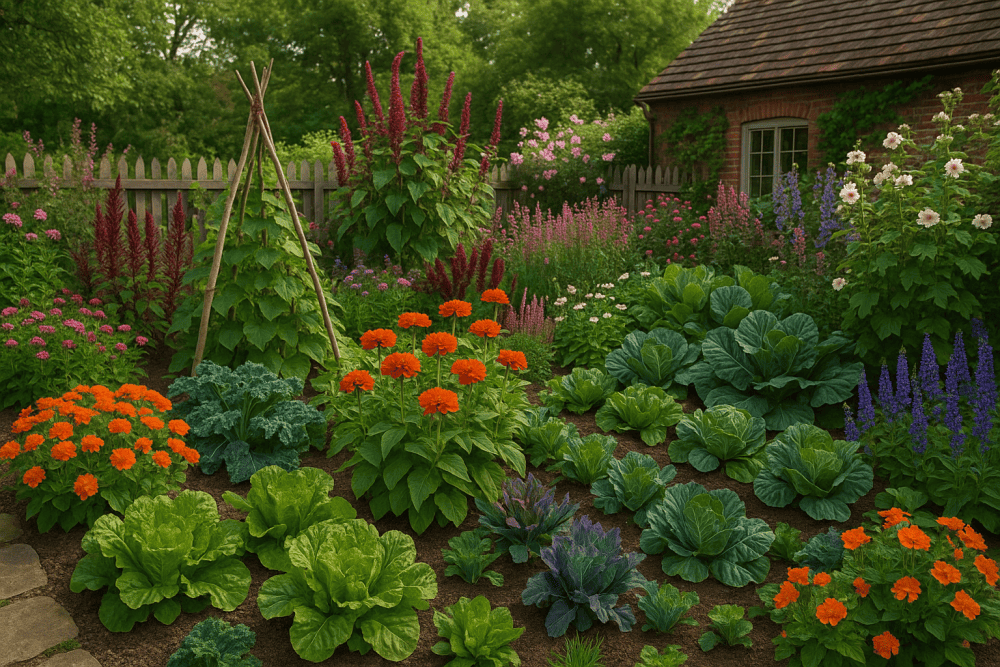
Combining Flowers and Vegetables in a Cottage Garden Layout
Why Combine Flowers and Vegetables?
- Natural pest control: Strong-scented flowers like marigolds repel nematodes and aphids.
- Pollinator attraction: Bright blooms invite bees, butterflies, and hoverflies that boost vegetable yields.
- Efficient space use: Companion planting allows different crops to share nutrients, water, and light.
- Continuous color: Flowers keep borders lively even when vegetables are harvested.
- Biodiversity: A varied garden encourages beneficial insects and a balanced ecosystem.
1. Planning Your Layout
- Tall crops like tomatoes, corn, or sunflowers provide backdrop height.
- Mid-level crops such as peppers, bush beans, and roses add bulk and texture.
-
Low growers like nasturtiums, alyssum, and lettuce fill borders and soften edges.
Consider pathways and seating areas for easy access and a welcoming feel. For planting schedules, refer to our Seasonal Planting Guides.
2. Choosing Flowering Companions
- Marigolds: Pest deterrents with bold color.
- Lavender: Provides fragrance and attracts pollinators.
- Nasturtiums: Trap aphids while offering edible flowers.
-
Sunflowers: Add height and serve as natural trellises for climbing beans.
See more ideas in our Flowering Plants guide for seasonal blooms.
3. Companion Planting Strategies
- Tomatoes + Basil + Marigolds: Basil boosts flavor; marigolds repel pests.
- Carrots + Onions + Nasturtiums: Onions deter carrot flies; nasturtiums distract aphids.
-
Beans + Sunflowers: Sunflowers provide natural support for climbing beans.
For additional pairing tips, check our Companion Planting for Pollinators resource.
4. Incorporating Herbs for Dual Benefits
- Rosemary and Thyme: Hardy and fragrant, loved by pollinators.
- Chives: Provide delicate blooms while deterring pests.
-
Mint: Best grown in containers to prevent spreading, adding lush greenery and insect resistance.
These herbs add fragrance, attract pollinators, and supply the kitchen with fresh flavor.
5. Seasonal Adjustments
- Spring: Plant tulips and daffodils alongside lettuce and radishes.
- Summer: Fill beds with zinnias, basil, tomatoes, and peppers.
- Fall: Add kale, asters, chrysanthemums, and carrots.
-
Winter: Feature hardy herbs like rosemary and evergreen shrubs for structure.
Rotate crops to maintain soil health and visual appeal.
6. Adding Decorative Structures
- Arbors: Support climbing roses and create romantic entrances.
- Trellises: Perfect for peas, beans, and clematis.
-
Rustic fences: Add charm while supporting nasturtiums or sweet peas.
These features frame the garden and add architectural interest. Explore more ideas in Walkway and Entry Landscaping.
7. Maintenance Tips for Mixed Gardens
- Water strategically: Group plants with similar needs to avoid stress.
- Mulch deeply: Conserve moisture, suppress weeds, and enrich soil.
- Deadhead flowers: Encourage new blooms and maintain neatness.
- Harvest often: Picking vegetables regularly prolongs production.
- Monitor pests: Use organic methods like neem oil or hand-picking for balance.
