
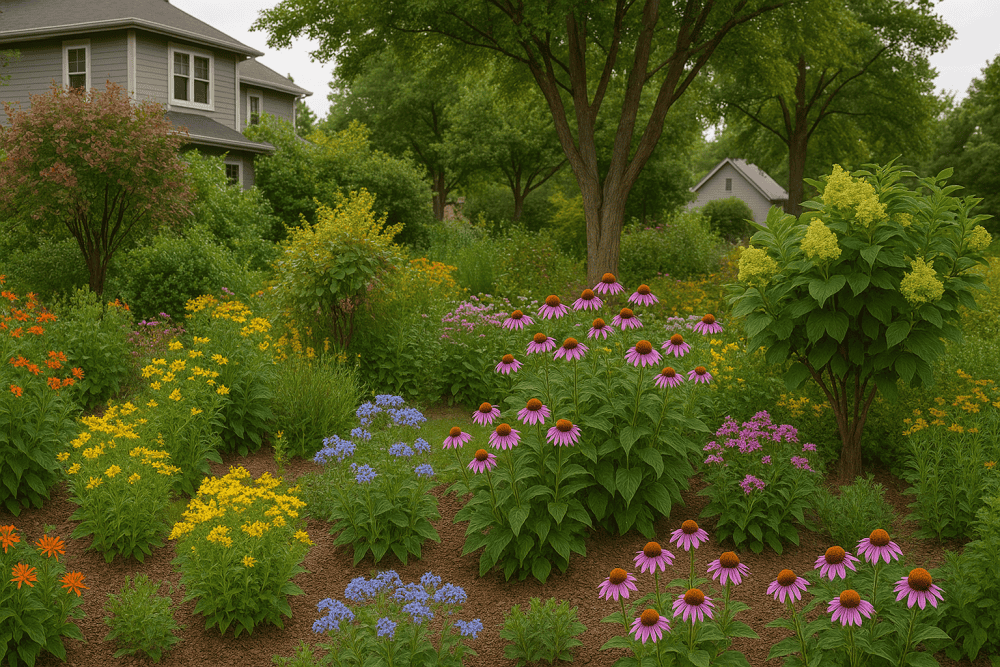
Using Native Plants in Cottage Garden Landscaping
Why Choose Native Plants for a Cottage Garden?
- Sustainability: They typically require less water and fewer chemicals compared to non-natives.
- Pollinator support: Native blooms provide vital nectar and pollen for bees, butterflies, and hummingbirds.
- Low maintenance: Once established, many natives thrive with minimal care.
-
Natural integration: Their look and growth habits blend beautifully with traditional cottage favorites.
By combining natives with classics, you achieve a lush, abundant garden that also benefits the environment.
1. Blending Native Plants with Classic Cottage Favorites
- Echinacea (Coneflowers): Long-lasting blooms in pinks and purples pair beautifully with roses.
- Black-eyed Susans: Their golden petals provide a cheerful contrast to lavender.
- Bee Balm: Adds fragrance and attracts hummingbirds alongside delphiniums.
-
Milkweed: A host plant for monarch butterflies, it thrives with hollyhocks and cosmos.
Mixing textures and bloom times ensures year-round interest while creating a lively, colorful tapestry.
2. Choosing Native Shrubs and Small Trees
- Serviceberry: Offers white spring flowers, edible summer berries, and fiery fall foliage.
- Redbud: Produces delicate pink blooms in early spring before leaves emerge.
- Witch Hazel: Provides fragrant yellow flowers in late winter when little else is blooming.
-
Elderberry: Both ornamental and edible, supporting pollinators and wildlife.
These woody plants add height and backbone to your garden while providing habitat and food for wildlife.
3. Creating Wildlife-Friendly Borders
- Tall natives like Joe-Pye weed create dramatic backdrops and attract butterflies.
- Mid-height flowers such as coreopsis or purple coneflowers fill the middle with color and texture.
-
Groundcovers like wild geraniums or creeping phlox reduce weeds and add fragrance.
This design ensures a lush, wildlife-friendly border that mimics the abundance of traditional cottage style.
4. Pairing Natives with Seasonal Planting
- Spring: Virginia bluebells and columbines bring early color and attract pollinators.
- Summer: Coneflowers, milkweed, and bee balm provide bold, colorful displays.
- Fall: Goldenrod and asters sustain pollinators late into the season.
-
Winter: Evergreen natives and ornamental grasses add structure and texture.
For planting timelines and combinations, refer to our Seasonal Planting Guides.
5. Incorporating Climbing Native Vines
- Trumpet Vine: Its bright orange blooms attract hummingbirds.
- Virginia Creeper: Provides lush green coverage in summer and brilliant red foliage in fall.
-
Passionflower: Produces exotic, intricate blooms that delight both people and pollinators.
Train these vines on trellises, fences, or arbors to frame walkways and seating areas with lush growth.
6. Seasonal Care for Native Plants
- Spring: Add mulch to conserve moisture and reduce weeds.
- Summer: Water young plants during droughts until they are well-established.
- Fall: Leave seed heads for birds, and cut back perennials after frost.
-
Winter: Protect new shrubs with mulch or burlap in colder climates.
Minimal care ensures your natives thrive while continuing to support local ecosystems.
