
Yard and Soil is a free gardening and landscaping guide for homes across the United States. Every guide carries the byline Yard and Soil editorial team. Each one explains how to plan, plant and care for a garden or yard, and why each step works, in plain words for beginners.
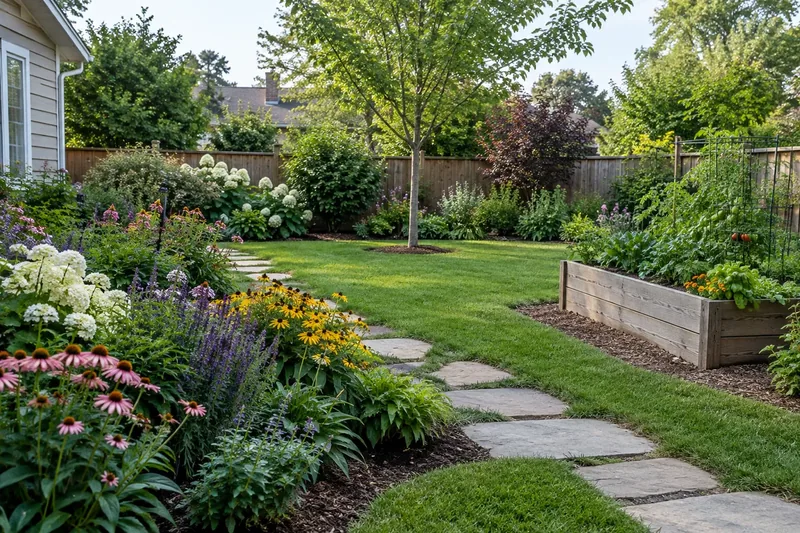
This page explains what the site covers, who writes the guides, how they are researched, and how to tell us about a mistake.
What Yard and Soil covers
The site is organized into six groups of topics, the same groups as the menu at the top of every page. Each topic page gives an overview and links to the articles on that subject.
- Garden: Small Garden Ideas, Shade Garden Ideas, Container Garden Ideas and Backyard Garden Layouts.
- Landscape: Hardscaping Tips, Hillside Landscaping, Drought-Tolerant Landscapes and Landscape Lighting Design.
- Plants: Perennials, Succulents, Flowering Plants and Trees for Landscaping.
- Garden styles: Cottage Garden Style, Modern Garden Design, Tropical Garden Style and Japanese Zen Gardens.
- Front yard: Low-Maintenance Front Yards, Curb Appeal Landscaping, Front Yard Flower Beds and Walkway and Entry Landscaping.
- Vegetable gardens: Raised Bed Gardening, Companion Planting, Seasonal Planting Guides and Urban Vegetable Gardening.
Who writes the guides
Every article is published under the byline Yard and Soil editorial team, and each article shows the date it was first published. The byline links to this page, so readers can always see how the guides are made.
Yard and Soil is a publisher, not a landscaping company. It does not sell plants, products or garden design services, and it does not install or maintain gardens. The guides are written to help you do the work yourself, or to talk more clearly with a professional you hire.
How the guides are researched
The guides describe researched, widely accepted garden practice. They do not tell the story of one garden, and they do not claim results from our own planting. The aim is advice that works in a wide range of US yards.
- Named sources for numbers. Sizes, costs, spacings and water savings come from named sources: university extension services, public agencies such as the EPA and local water utilities, lighting makers' guides, and established home and garden publications. Our newer guides list their sources at the end of the page.
- Checked before publishing. New and rewritten guides are checked against their sources and reviewed before they go on the site. A fact that cannot be checked is left out.
- The reason behind each step. A guide explains why a method works, not only what to do, so you can adapt it to your own yard.
- Plain words. Short sentences, lists for steps, and tables when things are compared side by side.
Your region matters
The United States covers very different climates, soils and rules, and no single guide fits every yard. Where it matters, our guides say so and point you to a local source. Three local checks help with almost any project:
- Your plant hardiness zone. The USDA Plant Hardiness Zone Map shows which perennials, shrubs and trees can survive the winters where you live.
- Your county extension office. Extension offices offer soil tests and advice for your area. Our Drought-Tolerant Landscapes guide explains how a soil test helps a low-water yard.
- Your local building office. Building rules for steps and stoops vary from place to place. Our front walk guide suggests checking before any concrete is poured.
How to use the site
- Start with a topic page. Each menu topic, such as Landscape Lighting Design, gives the main points first and then links to the deeper articles.
- Check the date. Each article shows the date it was first published, so you can tell how recent its advice is.
- Follow the sources. Newer guides link to each source they name, so you can read the original or check a figure yourself.
Who the guides are for
The guides are written for home gardeners, from first-time planters to people redoing a whole yard. They suit most situations:
- Small spaces: balconies, patios and containers, for renters and city gardeners.
- Whole yards: backyard layouts, front yards, slopes and low-water designs.
- Food growing: raised beds, companion planting and seasonal vegetable plans.
- Planning a hired project: the basics to know before you ask a landscaper for a quote.
Questions and corrections
If you spot a mistake, or a figure that looks out of date, please tell us. Email admin@yardandsoil.com. A report is quickest to check when it includes:
- the address of the page,
- the sentence or figure that looks wrong,
- a source for the correct information, if you have one.
We check each report against the sources and correct the guide when it is wrong.