
Shade Garden Design Inspiration
Shady corners and low-light yards don't have to be dull or lifeless. With the right layout, plant palette, and textures, shade gardens can become tranquil, lush escapes filled with color, movement, and fragrance. Whether you’re dealing with dappled sunlight under trees or a fully shaded side yard, this guide offers shade garden ideas to help you create a welcoming and vibrant outdoor sanctuary.
Benefits of a Shade Garden
- Cooler microclimate in summer
- Lower water demands compared to full sun gardens
- Unique textures and foliage diversity
- Soothing atmosphere for relaxation
- Support for pollinators and wildlife
Types of Shade to Know
1. Full Shade
- Less than 3 hours of direct sunlight
- Under dense tree canopies or buildings
2. Partial Shade / Dappled Light
- 3–6 hours of filtered light
- Often found under trees with open canopies
3. Light Shade
- Bright indirect light or early morning sun only
Understanding your yard’s shade type helps you choose the right plants and layout.
Layout Ideas for Shade Gardens
1. Woodland Path Garden
- Meandering gravel or mulch paths through mixed beds
- Use native ferns, hostas, and woodland phlox
- Add rustic benches or stepping stones
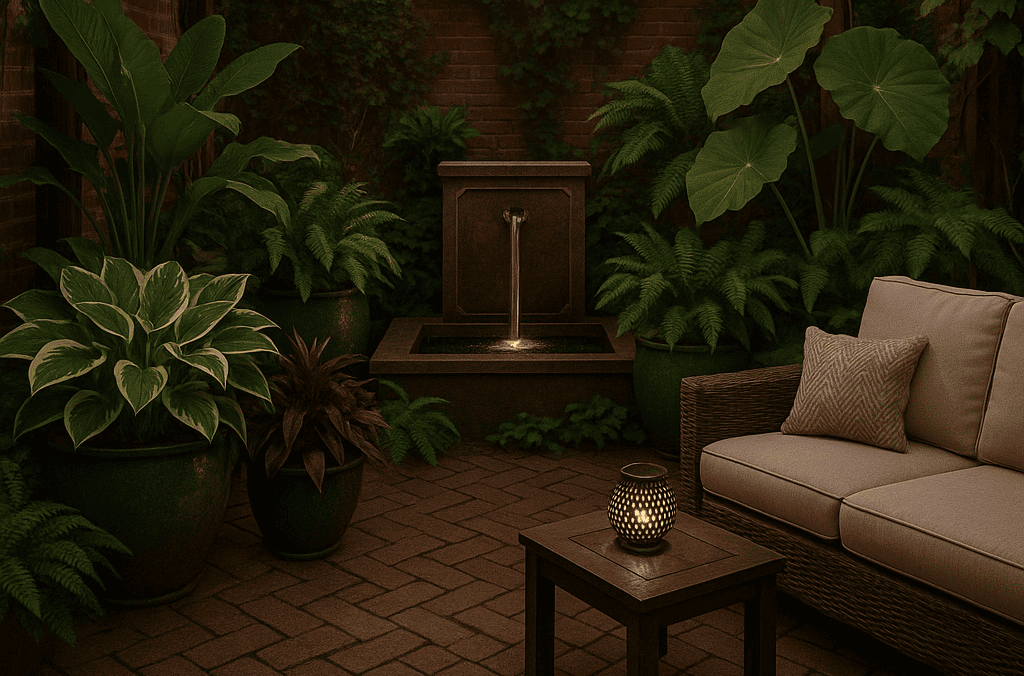
2. Courtyard Shade Retreat
- Enclosed area with vine-covered pergola or high fences
- Incorporate shade-loving tropicals in large containers
- Add water features and ambient lighting for ambiance
3. Shady Border Beds
- Layer shade plants along a fence, wall, or building foundation
- Use height tiers: tall shrubs in back, mid-level perennials, low groundcovers
- Include seating or accent sculptures
4. Japanese-Inspired Zen Garden
- Simplicity and texture over color
- Combine moss, stone lanterns, ornamental grasses
- Small-scale maples, painted ferns, and bamboo accents
Best Plants for Shade Gardens
Foliage Stars:
- Hostas
- Heuchera (Coral Bells)
- Hakonechloa (Japanese Forest Grass)
- Brunnera (Siberian Bugloss)
Flowering Favorites:
- Astilbe
- Bleeding Heart (Dicentra)
- Hellebore (Lenten Rose)
- Toad Lily (Tricyrtis)
Groundcovers:
- Sweet Woodruff
- Lamium
- Pachysandra
- Ajuga (Bugleweed)
Shrubs & Trees:
- Hydrangeas (Smooth, Oakleaf)
- Camellia
- Dogwood (Cornus)
- Japanese Maple
Shade Garden Design Tips
- Layer texture: Combine broad, fine, and fern-like foliage
- Add structure: Use boulders, benches, or tree stumps
- Focus on contrast: Light leaves against dark mulch pop visually
- Use paths: Guide movement and prevent trampling plants
- Incorporate fragrance: Add sweet box, lily-of-the-valley, or mint
Accessories and Features
- Water feature: Fountain, birdbath, or basin for reflection
- Outdoor lighting: Soft uplighting on trees, pathway lanterns
- Garden art: Glazed pots, driftwood, mossy statues
- Furniture: Wooden benches, hammocks, or bistro sets
Shade Garden Maintenance Tips
- Mulch annually to conserve moisture and suppress weeds
- Water regularly during dry spells (shade gardens still need hydration!)
- Divide perennials like hostas every 3–5 years to maintain vigor
- Watch for slugs and snails, both are common in moist shade areas
Related Reading
FAQs About Shade Gardens
Can I grow vegetables in a shade garden?
Leafy greens like lettuce, spinach, and arugula grow well in partial shade. Root crops and fruits typically need more sun.
Do shade gardens still need to be watered?
Yes, while evaporation is lower in shade, deep watering is still needed, especially during summer heat.
What’s the most low-maintenance plant for shade?
Hostas and ferns are among the easiest, which thrive with minimal care once established.
Want help transforming a shaded yard into a stunning sanctuary? Contact Yard and Soil to plan a customized shade garden layout tailored to your space, climate, and style.
