
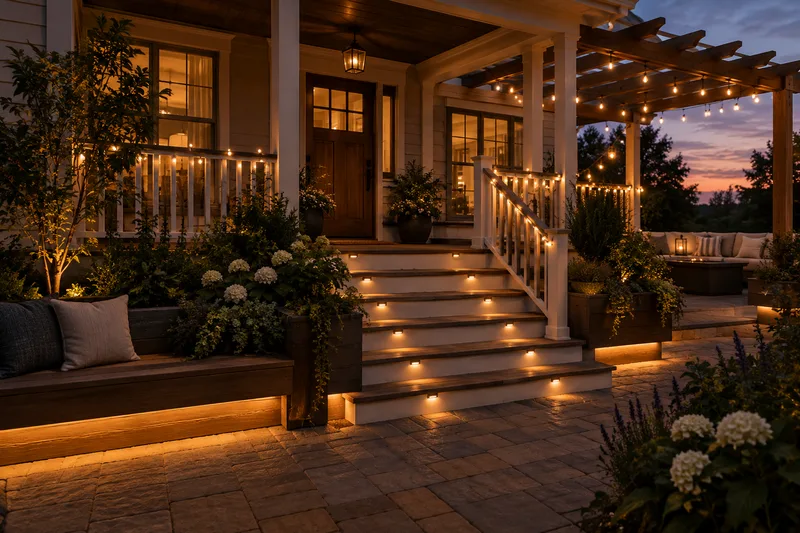
The best front porch planter ideas start with the light at your door. Choose plants for sun or shade, then frame the entry with a matching pair of planters or a group of pots in three heights. Use large pots with drainage holes and fresh potting mix, and change the plants with the seasons so the porch always looks cared for.
Below are layouts that frame a front door, a table of porch container plants for sun and shade, how to plant a pot that looks full, and how to keep it going. Plant facts come from extension services, listed at the end.
Front door planters: layouts that work
A planter by the door does two jobs. It welcomes guests, and it points them to the entrance. A guide from the WSU Skagit County Extension Master Gardeners notes that planters with seasonal flowers offer cheerful color and a decorative touch at the entry. These layouts suit most homes:
- A matching pair. Two identical planters, one on each side of the door. This suits a centered door and a formal or traditional house.
- A group of three. Tall, medium and short pots on one side of the door. This suits an off-center door or a porch with a bench on the other side.
- Pots on the steps. One pot on each step, all the same, leading up to the door. Leave the full width of each tread clear for feet.
- Railing planters and window boxes. Long, narrow boxes that add color without taking floor space on a small porch.
- Hanging baskets. For a covered porch with a ceiling. NC State notes that Boston ferns and cascading petunias both suit hanging baskets.
- One large urn. A single big planter can do more than several small ones on a compact stoop.
Whatever the layout, keep the door swing, the steps and the path to the door clear. Our walkway and entry guide covers the sizes of the walk and stoop.
Porch container plants for sun and shade
Start by watching the porch for a day. Colorado State University Extension advises against mixing plants with different light needs in one container. A covered porch facing north may get no direct sun at all, while an open stoop facing south may bake.
| Plant | Light | Season | Role in the pot | Good to know |
|---|---|---|---|---|
| Geranium (Pelargonium) | Full sun | Warm months until frost | Filler | Can dry out a little between waterings; leggy in too little light |
| Petunia | Full sun to part shade | All summer until frost | Filler or spiller | Cascading types suit hanging baskets; deadhead for more flowers |
| Ornamental sweet potato vine | Full sun to part shade | Summer | Spiller | Grown for colorful leaves; deer often damage it |
| Coleus | Best in part shade; "sun" types for sun | Summer | Thriller or filler | Grown for its leaves; may wilt in full sun |
| Impatiens | Part to full shade | Late spring to early fall | Filler | Prone to downy mildew; New Guinea impatiens (Impatiens hawkeri) resist it |
| Boston fern | Bright, indirect light or shade | Summer outdoors | Thriller or hanging basket | Keep the soil moist; it likes humidity |
| Pansy | Full sun to part shade | Fall to spring (cool season) | Filler or spiller | Planted in fall for winter and early spring bloom where winters are mild |
| Sweet alyssum | Full sun to part shade | Spring and fall | Spiller | Honey-scented flowers; slows in hot summers |
| English lavender | Full sun | Summer | Thriller | Fragrant; needs very well-drained mix |
| Green Velvet boxwood | Sun to part shade | All year (evergreen) | Thriller or a pot of its own | Can be clipped to shape; see the winter note below |
Most of the summer plants above are tender. NC State lists geranium, petunia, coleus, impatiens and sweet potato vine as plants grown as annuals outside the warmest zones. Treat them as one-season plants unless you bring them indoors.
How to plant entryway planters: thriller, filler, spiller
A full, balanced pot usually has three parts: a tall plant for height, mounded plants around it, and a trailing plant to spill over the edge. Colorado State University Extension describes the same idea: add a spike or tall plant for height and a trailing plant to drape down from the container.
- Pick a pot with drainage. CSU calls drainage the most important thing to consider. If a container has no holes, it says to drill several in the bottom.
- Go big. CSU advises a container large enough that plants do not dry out between waterings. Small pots on a sunny porch dry fast.
- Use potting mix. CSU says not to use garden soil in containers, even if it is pasteurized.
- Place the thriller. Set the tall plant in the center, or at the back if the pot sits against a wall.
- Add fillers. Ring the tall plant with mounding plants.
- Finish with spillers. Tuck trailing plants near the rim so they hang over the edge.
- Water well. Water until it runs from the drainage holes, then top up the mix if it settles.
A shady porch example: a Boston fern in the center, impatiens around it and a trailing coleus at the edge. A sunny porch example: geraniums in the middle with petunias and sweet potato vine spilling over. For more combinations, see Stunning Mixed Container Gardens.
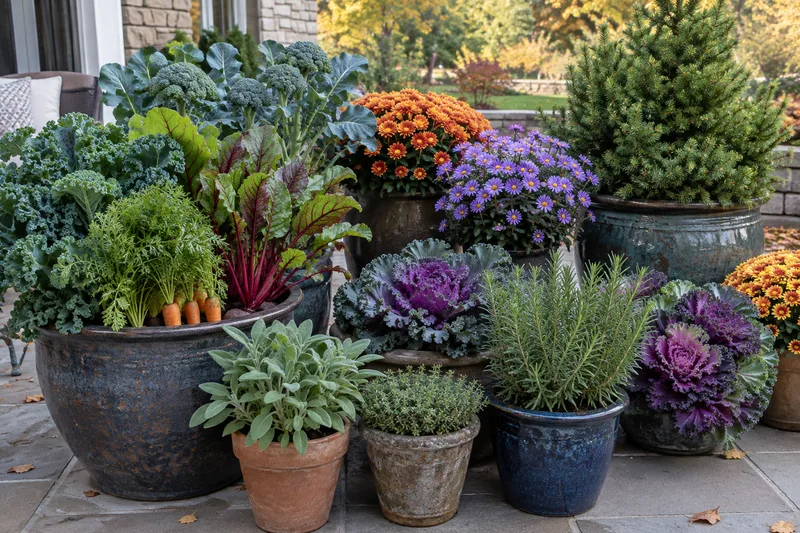
Change the planters with the seasons
Seasonal swaps keep front door planters looking fresh. One easy approach: keep one evergreen or a striking pot as the base, and change only the flowers around it.
- Spring: pansies and sweet alyssum, which both bloom in cool weather.
- Summer: geraniums and petunias in sun; impatiens, coleus and ferns in shade; sweet potato vine to trail.
- Fall: a second round of pansies, planted in fall for color into winter and spring in milder areas.
- Winter: an evergreen such as boxwood where it can stay outside in a pot, dressed with cut branches or seasonal decorations.
Winter needs care in cold climates. Colorado State University Extension advises treating perennials, ornamental grasses and woody plants in containers as annuals. Check with your local extension office before counting on a potted shrub to survive a cold winter.
Caring for porch planters
- Water often. CSU notes that even plastic containers may need watering once or twice a day as plants grow. Check the mix with a finger every day in hot weather.
- Know your pot. CSU says clay and wood lose moisture quickly, while plastic and glazed ceramic hold water longer.
- Feed regularly. CSU suggests a dilute soluble fertilizer at each watering, or full strength every one to two weeks. Follow the label on the product you use.
- Deadhead. NC State notes that removing spent flowers keeps petunias and pansies blooming longer.
- Watch a covered porch. Rain may not reach pots under a roof, so they depend on you for every drop.
Common porch planter mistakes
- No drainage holes. Water sits at the bottom and roots rot.
- Garden soil in the pot. CSU advises potting mix instead.
- Sun and shade plants together. One of them will struggle.
- Pots too small for the door. Tiny pots look lost beside a full-size door and dry out fast.
- Blocking the way. Pots that crowd the steps or the door swing are a trip hazard.
Planters work best as part of a planned entry. Pair them with low plants along the walkway and, for more pot ideas, browse our Container Garden Ideas.
More guides on Yard and Soil
- Walkway and Entry Landscaping: how to plan the route, width and steps of a front walk.
- Plants to Line a Front Walkway: edge plants, a second row and fragrant shrubs by the door.
- Container Garden Ideas: all of our container guides in one place.
- Choosing the Right Containers: pot materials, sizes and drainage.
- Seasonal Container Gardening: what to plant in pots each season.
Sources
- M. Roll and C.R. Wilson, Colorado State University Extension, Container Gardens (drainage, potting mix, container size, light needs, tall and trailing plants, watering, materials, fertilizer, treating perennials and woody plants as annuals).
- Everett Chu, WSU Skagit County Extension Master Gardeners, The Entryway Garden (planters with seasonal flowers at the entry).
- North Carolina State Extension Plant Toolbox: geranium, petunia, sweet potato vine, coleus, impatiens, Boston fern, pansy, sweet alyssum, English lavender, Green Velvet boxwood (light, season, container use, care notes).