
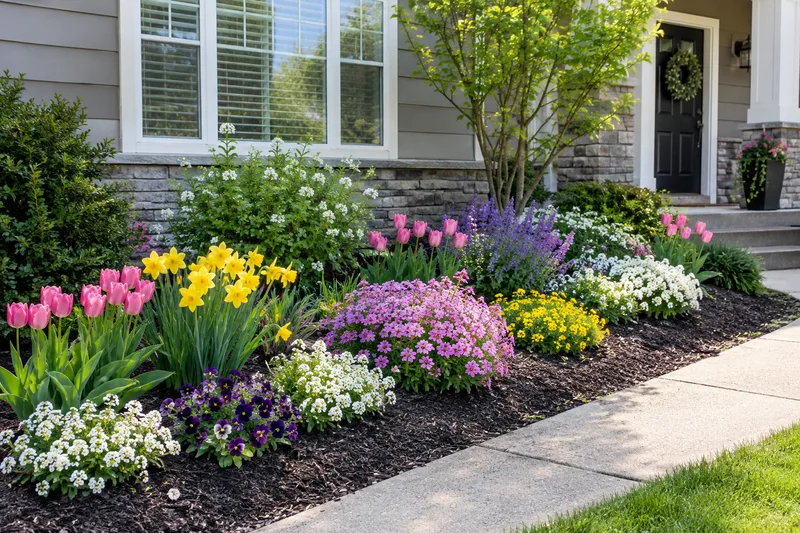
The best spring bulbs to plant in fall are snowdrops, crocus, daffodils, Siberian squill, grape hyacinths, hyacinths, tulips and ornamental alliums. Plant them once the soil has cooled, and set each bulb 3 to 4 times as deep as it is wide. Over winter they grow roots and get the long cold spell most of them need, then flower from late winter into early summer.
This guide covers when to plant, how deep and how far apart, which bulbs to choose and in what order they bloom. It also covers what to do in a warm climate, where winters may be too mild for some bulbs to flower on their own.
The best spring bulbs at a glance
Zones, heights, light and bloom times below come from the NC State Extension Gardener Plant Toolbox. Depths and spacing come from NC State and from Clemson Cooperative Extension; where they differ, both are shown. The bulbs are listed roughly in the order they flower.
| Bulb | Blooms | Height | Light | USDA zones | Depth | Spacing |
|---|---|---|---|---|---|---|
| Snowdrop | Late winter to early spring | 4 to 10 inches | Sun or part shade | 3 to 9 | Not listed | Not listed |
| Crocus | Early spring (February, March) | 2 to 6 inches | Sun or part shade | 3 to 8 | 2.5 to 3 inches | 2 to 4 inches |
| Daffodil | Late winter to late spring, by cultivar | 8 to 30 inches | Sun or part shade | 4 to 8 | 6 to 8 inches | 3 to 6 inches |
| Siberian squill | Spring | Not listed | Sun or part shade | Not listed | 5 inches | 1 to 2 inches |
| Grape hyacinth | Mid-spring | 6 to 9 inches | Sun or part shade | 4 to 8 | 5 inches | 3 to 4 inches |
| Hyacinth | Mid-spring (April, May) | 8 to 12 inches | Sun or part shade | 4 to 8 | 4 to 6 inches | 3 to 6 inches |
| Tulip | Middle to late spring | 4 to 28 inches | Full sun | 3 to 8 | 6 to 8 inches | 4 to 6 inches |
| Giant allium | Early summer (June, July) | 1 to 6 feet | Full sun | 4 to 8 | 8 inches | 12 inches |
Zone ranges vary between sources and between cultivars. Check the bulb package or a local nursery for the variety you buy.
Why spring bulbs go in the ground in fall
Spring bulbs need cold to flower. Clemson Cooperative Extension says most need a chilling period of 12 to 16 weeks. Planting in fall gives them that cold naturally, through winter, while the soil is still warm enough for roots to grow.
The bulb itself is a packed lunch. It holds the food the plant needs to push up leaves and a flower in spring. That is why bulbs bought in fall can flower the first spring with no feeding at all, and why the leaves matter so much after bloom: they refill the bulb for the next year.
When to plant tulip bulbs and other spring bulbs
Plant spring bulbs once the soil at planting depth stays below 60 degrees F. That is the rule Clemson Cooperative Extension gives, and it works anywhere: the soil cools sooner in cold-winter areas, so planting starts earlier in fall there than in the South.
- Buy early, plant when it cools. Clemson suggests buying bulbs in September or October, then waiting for cooler weather to plant. Store them somewhere below 60 degrees F until then.
- Daffodils: October or November in South Carolina, per Clemson.
- Hyacinths: late October or November in South Carolina's upper Piedmont; late December or early January on the coast.
- Crocus: November in South Carolina.
- Tulips in central and coastal South Carolina: keep them in the refrigerator from purchase until planting in November to late December.
Those dates are for a warm Southern state. In colder regions the soil reaches 60 degrees F sooner, so the same bulbs go in earlier. Your county extension office can give the usual planting window for your area. Whatever the region, plant while you can still dig, before the ground freezes.
Fall bulb planting guide: step by step
Good drainage matters more than anything else. Clemson calls it essential, because bulbs sitting in wet soil over winter can rot. Follow these steps:
- Pick a sunny spot that drains. Tulips and alliums want full sun. Daffodils, crocus, hyacinths and the small bulbs also take part shade.
- Fix poor drainage first. Clemson suggests mixing 2 to 3 inches of organic matter, such as shredded pine bark or compost, into the bed 10 to 12 inches deep. Raised beds also help.
- Test the soil if the bulbs are meant to stay for years. Most bulbs do best at a soil pH of 6 to 7, and a soil test shows whether lime or fertilizer is needed.
- Dig to the right depth. Measure from the base of the bulb: 3 to 4 times as deep as the bulb is wide, per Clemson. The table above gives depths for each bulb.
- Set the bulbs pointed tip up, spaced as in the table. Large bulbs go 3 to 6 inches apart, small ones 1 to 2 inches apart.
- Cover with soil and water well. NC State notes that keeping the soil moist right after planting helps roots get started.
- Mulch. Clemson suggests 2 to 3 inches of mulch over the bed to even out soil moisture and keep mud off the flowers in spring.
- Mark the spot. Bulbs are easy to forget, and a label stops you digging into them next year.
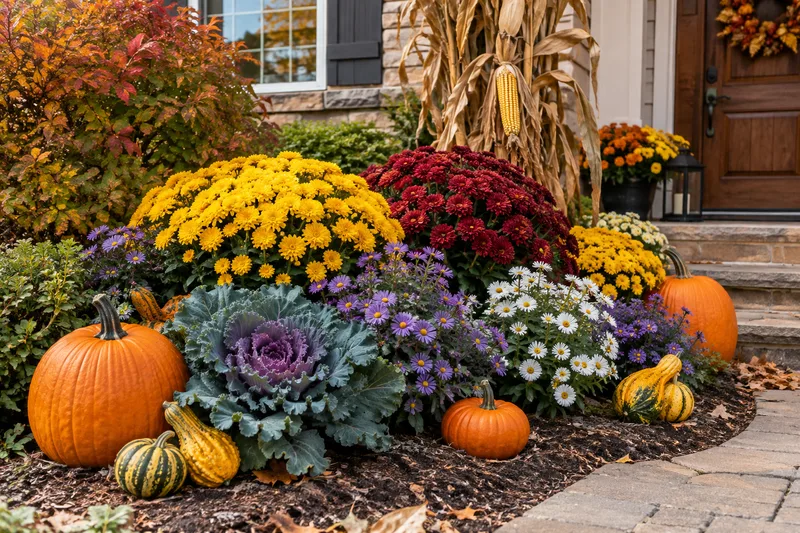
A fall bed of mums and asters, like the one above, is a good place to tuck bulbs in now. When the fall plants fade, the bulbs come up through the same bed in spring.
Plant in groups, not rows
Clemson notes that bulbs look best planted in masses. Dig one wide hole and set 7, 10 or more bulbs in it, rather than a single line of bulbs along the edge of a bed. Small bulbs such as crocus and grape hyacinth look best in dozens. NC State suggests 35 to 70 crocus corms per square foot.
The best spring bulbs, one by one
These are the best spring bulbs for most US gardens, in roughly the order they flower.
Snowdrop
Snowdrops are the first to flower, in late winter to early spring, on stems 4 to 10 inches tall. NC State lists them for zones 3 to 9, in sun or part shade, and as deer resistant. The bulbs are toxic if eaten. Plant them where you will see them from a window, since they flower when few people are out in the garden.
Crocus
Crocus flower in early spring, usually February or March, and stay under 6 inches tall. Plant the corms in fall about 2.5 inches deep and 2 inches apart, per NC State; Clemson gives 3 inches deep and 3 to 4 inches apart. Rodents are the main problem. Squirrels are good at finding newly planted corms and digging them up to eat.
Daffodil
Daffodils are the most dependable spring bulb for most yards. Depending on the cultivar, they flower from late winter to late spring, each for 2 to 3 weeks, on stems 8 to 30 inches tall. Plant them about 8 inches deep (NC State) or 6 to 8 inches (Clemson). Deer and rabbits leave them alone, which makes them the first choice where deer visit. They are toxic to cats, dogs and horses, and the bulb is the most poisonous part.
Siberian squill
Siberian squill has small blue flowers in spring and suits planting in large numbers under shrubs or in a lawn edge. NC State gives a depth of 5 inches to the base of the bulb, with bulbs 1 to 2 inches apart or 20 to 30 per square foot. It is listed as deer resistant. NC State rates it highly poisonous, so keep it away from places where pets dig.
Grape hyacinth
Grape hyacinths make small spikes of blue flowers in mid-spring, 6 to 9 inches tall. Plant the bulbs 5 inches deep and 3 to 4 inches apart. NC State says they naturalize readily, meaning they spread on their own, and warns they can be weedy and crowd out other plants. Give them space where spreading is welcome, such as under shrubs.
Hyacinth
Hyacinths are known for their scent. They flower in mid-spring, in April or May, for 2 to 3 weeks, on stems 8 to 12 inches tall. Clemson gives a depth of 4 to 6 inches and spacing of 3 to 6 inches. Wear gloves when planting, because the bulbs can irritate skin. NC State lists them as resistant to deer and rabbits.
Tulip
Tulips need full sun and grow 4 to 28 inches tall, depending on the type. They flower in middle to late spring and are listed for zones 3 to 8. NC State says to plant them three times the depth of the bulb, and Clemson gives 6 to 8 inches deep and 4 to 6 inches apart.
Two things to know before buying. First, most hybrid tulips do not come back well. NC State says performance usually drops a lot from the second year, and many gardeners treat hybrids as annuals. Species tulips often do better as perennials. Second, tulips are popular with animals. Deer eat the flowers, squirrels dig up new bulbs, and mice and voles eat them.
Giant allium
Ornamental alliums carry the bulb season into early summer. Giant allium flowers in June and July for 2 to 3 weeks and can reach 6 feet. NC State says to plant the bulbs in fall, 8 inches deep and 12 inches apart, in full sun. Tall stems may need staking. It is listed as resistant to deer and rabbits, and it is a problem for cats and dogs if eaten.
Plan a bloom sequence from late winter to early summer
Choosing bulbs from each part of the season gives months of color from one fall planting:
- Late winter: snowdrops, then the earliest daffodils.
- Early spring: crocus, Siberian squill and more daffodils.
- Mid-spring: grape hyacinths and hyacinths, with late daffodils.
- Middle to late spring: tulips.
- Early summer: giant alliums, just as summer flowers start. See Flowers That Bloom All Summer for what comes next.
Layering helps in a small space. Plant the large, deep bulbs first, such as tulips and daffodils, then cover them partly and set smaller bulbs like crocus or grape hyacinths above them at their own shallower depth. Each flowers at its own time from the same patch of ground.
Keeping deer, squirrels and voles away
Animals can undo a fall planting before it ever flowers. The simplest fix is to plant the bulbs they tend to leave alone.
| Bulb | What NC State says about animals |
|---|---|
| Daffodil | Deer and rabbit resistant |
| Giant allium | Deer and rabbit resistant |
| Hyacinth | Deer and rabbit resistant |
| Snowdrop | Deer resistant |
| Siberian squill | Deer resistant |
| Crocus | Deer resistant, but rodents and squirrels eat the corms |
| Grape hyacinth | Deer occasionally damage it |
| Tulip | Deer eat the flowers; squirrels dig new bulbs; mice and voles eat them |
Where deer and squirrels are common, plant daffodils, alliums and hyacinths, and keep tulips in pots or beds near the house, where you can watch them.
Spring bulbs in warm climates
Where winters are mild, some bulbs do not get enough cold to flower. Clemson gives these steps for warm areas:
- Chill them yourself. Store bulbs in the refrigerator in ventilated bags until planting time. Hyacinths need 6 to 8 weeks of refrigeration in coastal areas.
- Keep fruit out of that refrigerator drawer. Ripening fruit gives off ethylene gas, which can stop bulbs from blooming.
- Buy pre-chilled bulbs, which some suppliers sell.
- Choose bulbs that need no chilling. Tazetta daffodils, including paperwhites, do not need it.
- For tulips that return, pick species types. Clemson names Tulipa clusiana (lady tulip), T. saxatilis, T. batalinii and T. eichleri as tulips that naturalize in the South.
After the flowers fade
What you do in late spring decides how well bulbs flower next year.
- Remove faded tulip and daffodil flowers, so the plant does not spend energy on seed.
- Leave the leaves. Clemson says to leave them for at least six weeks after bloom, or until they turn brown. They feed the bulb for next spring.
- Bulbs planted for a single season need no fertilizer. For bulbs that stay, Clemson suggests a slow-release complete fertilizer worked into the root area at fall planting, following the label.
- Water in a dry spring. Normal rainfall is usually enough, but extra water in a hot, dry spring helps flowers last longer.
Common questions
Is it too late to plant bulbs in December?
Not in the South. Clemson's coastal planting dates run into late December and early January. In colder areas, ask your county extension office, and plant only while the ground can still be dug.
Do spring bulbs come back every year?
Many do, if the leaves are left to ripen after bloom. NC State says grape hyacinths naturalize readily. Hybrid tulips are the main exception: their flowering usually drops off after the first year.
How deep do you plant tulip bulbs?
Clemson gives 6 to 8 inches deep and 4 to 6 inches apart. NC State's rule is three times the depth of the bulb.
Can I plant bulbs in partial shade?
Many can. NC State lists daffodils, crocus, hyacinths, grape hyacinths, snowdrops and Siberian squill for sun or part shade. Tulips and giant alliums want full sun.
More guides on Yard and Soil
- Flowering Plants: a plant list by bloom season, with light and care for each.
- Flowers That Bloom All Summer: what to plant for color after the bulbs finish.
- Seasonal Flowers for Front Yards: flower ideas for each season by the front door.
- Seasonal Planting Guides: what to plant and when through the year.
Sources
- Karen Russ and Robert F. Polomski, Clemson Cooperative Extension Home and Garden Information Center, Spring-Flowering Bulbs (HGIC 1155).
- North Carolina State Extension, Extension Gardener Plant Toolbox: Tulipa, Narcissus, Crocus, Hyacinthus orientalis, Muscari armeniacum, Galanthus nivalis, Scilla siberica and Allium giganteum.