
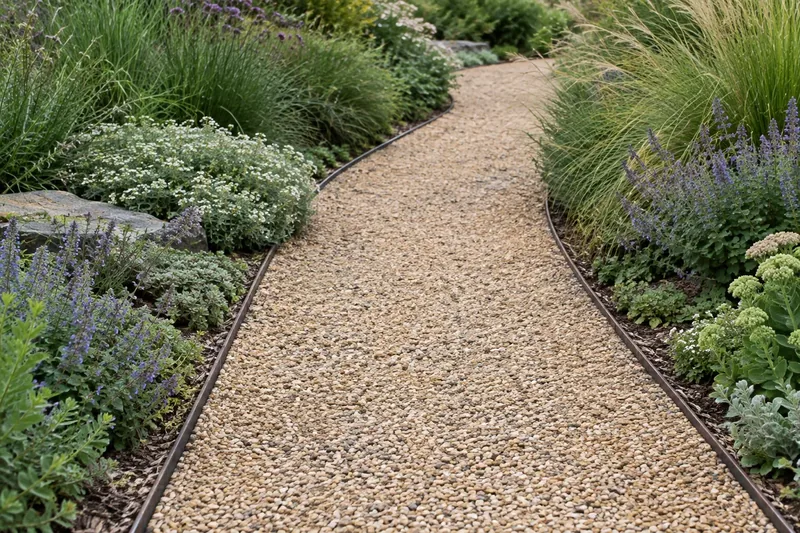
The most useful flower bed edging ideas fall into six groups: stone, brick, metal, plastic, wood and living plants. Stone and brick give a classic, solid edge. Steel or aluminum gives a thin, clean line that bends into smooth curves. Plastic is light and cheap but less sturdy. Wood suits a rustic or raised bed. A low hedge or a row of compact perennials makes a soft, living edge. The right choice depends on your house, the shape of the bed, and whether you need a mowing strip next to the lawn.
Why edge a flower bed?
- It keeps grass out. Lawn grasses creep sideways into beds. A firm edge slows them down.
- It keeps mulch and soil in. Rain and hoses wash loose mulch onto lawns and paths. An edge holds it back.
- It makes mowing easier. A flat edge set level with the lawn lets one mower wheel ride along it, so there is less trimming.
- It makes the bed look finished. Even a simple planting looks cared for with a crisp line around it.
Flower bed edging materials compared
This table compares the main options in general terms. Prices and products vary by region and maker, so check local suppliers and follow each maker's installation guide.
| Material | Look | Curves | Effort to install | Best for | Watch out for |
|---|---|---|---|---|---|
| Natural stone | Classic, natural | Good with small stones | Medium to high; stones are heavy | Cottage and traditional houses, rock beds | Grass can grow between loose stones |
| Brick or pavers | Neat, traditional | Gentle curves | Medium; needs a level trench | Brick houses, mowing strips | Can heave if not set on a firm base |
| Steel or aluminum | Thin, modern line | Very good | Low to medium | Modern beds, gravel beds, smooth curves | Sharp top edges on some products |
| Plastic | Plain, low-profile | Good | Low | Tight budgets, quick jobs | Can lift out of the ground over time |
| Wood or timber | Rustic | Poor; straight runs | Low to medium | Raised and vegetable-style beds | Rots in time; avoid old railroad ties |
| Spade-cut edge | Natural, no material | Very good | Low, but repeated | Any bed, no budget | Needs re-cutting during the season |
| Living edge (low plants) | Soft | Very good | Low | Cottage beds, front of borders | Plants need trimming; does not stop grass alone |
Stone edging ideas
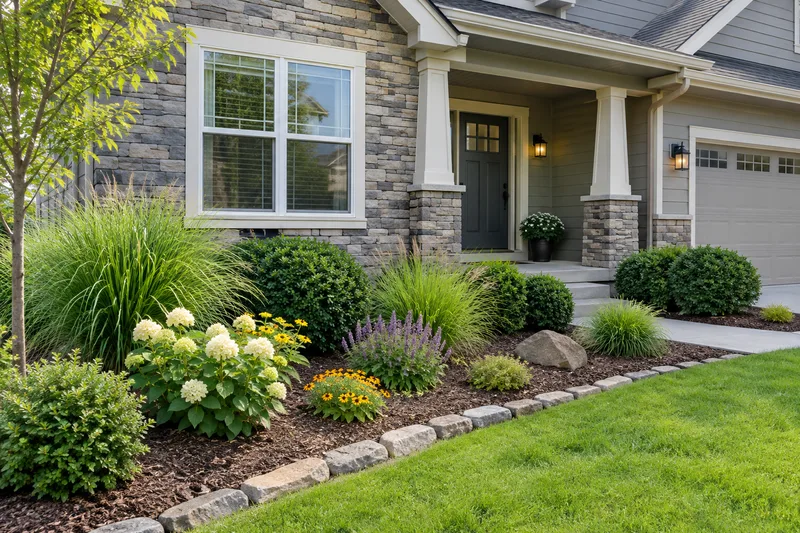
Stone edging lasts for years and suits almost any house. Match the stone to stone already on the house, the walk or the steps, so the yard looks planned.
1. A row of stone blocks
Rectangular stone or concrete blocks set end to end make a solid border with a slight rise, as in the photo above. Bed them on firm, level ground so they stay in line.
2. Flat flagstone mowing strip
Flat stones laid level with the lawn make a path for one mower wheel. The lawn can be mowed right to the edge, and plants can spill over the stone without being cut.
3. A line of river rock
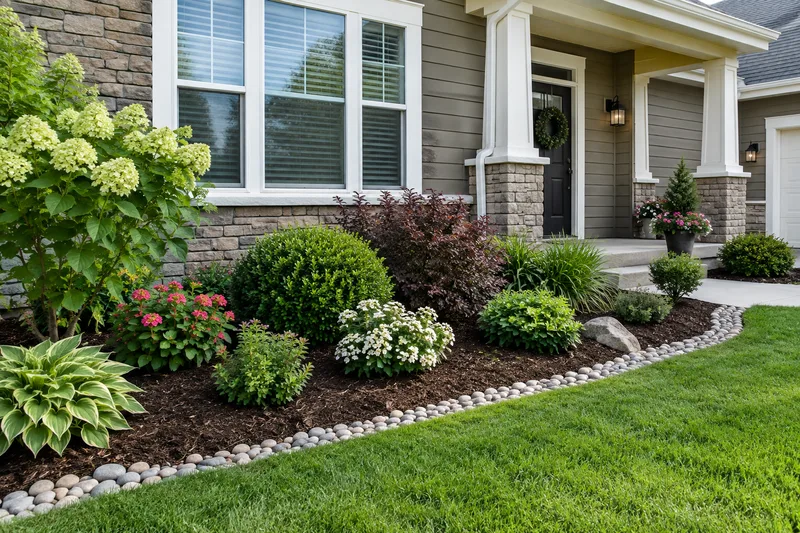
Rounded river stones laid in a curving line frame the bed and hold the mulch. Set them partly into the soil so they do not roll. Grass may need trimming between them by hand.
4. Small boulders
A few low boulders along the edge give a natural, informal look and suit rock gardens and dry beds. See Front Yard Landscaping with Rocks and Mulch for more on rock in beds.
Brick edging ideas
Brick is a classic choice, especially next to a brick house or walk. There are three common ways to set it:
- Flat, level with the lawn. Bricks laid flat in a row, or two rows, make a mowing strip. This is the neatest way and the easiest to mow along.
- On end, side by side. Bricks set upright in a trench, called a soldier course, make a taller edge that holds mulch well.
- Angled, sawtooth style. Bricks set at an angle, leaning on each other, give a decorative zigzag top. It suits cottage gardens.
Whichever way you choose, set brick on a firm, level base. A loose or uneven base lets bricks tilt and sink.
Metal landscape edging
Steel and aluminum edging make a thin, crisp line that almost disappears, so the plants and lawn take the eye. Metal bends into long, smooth curves better than most materials, which makes it a common choice for modern beds and gravel paths like the one at the top of this page.
- Steel. Strong and rigid. Weathering steel, sometimes called corten, rusts to a brown finish on purpose.
- Aluminum. Lighter and easier to bend by hand for tight curves.
- Safety. Where children play or people walk barefoot, look for a product with a rolled or covered top edge.
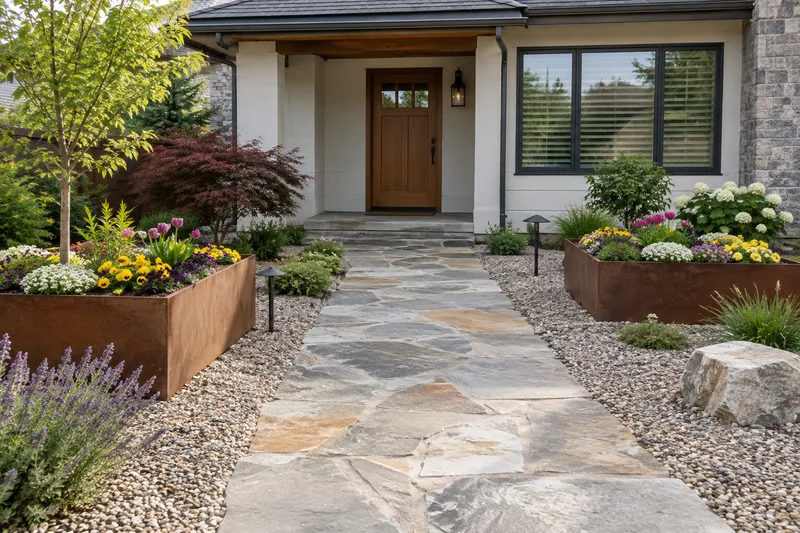
Steel also makes raised edges and planters, as in this front entry, where weathered steel boxes hold flowers above a gravel bed.
Most metal edging is held with stakes. Depth, stake spacing and height above the soil differ by product, so follow the maker's installation guide.
Other edging ideas
Spade-cut edge
The simplest edge uses no material at all. Cut a clean line between lawn and bed with a flat spade and pull the grass back. It costs nothing but needs re-cutting as grass grows back.
Plastic edging
Light, cheap and easy to bend. It works for quick jobs, but thin plastic can lift out of the ground over time, so check it each spring.
Wood and landscape timbers
Wood suits raised beds and rustic gardens. Avoid old railroad ties. The US Environmental Protection Agency explains that creosote, a wood preservative used on railroad ties, is not available to homeowners, and that treated ties are sometimes recycled as landscaping timbers. New landscape timbers are a simpler choice for a flower bed.
Concrete curbing
Poured concrete curbing makes a continuous, solid edge. It is long-lasting, but it is hard to change later, so be sure of the bed shape first.
Living edges: plants that make a border
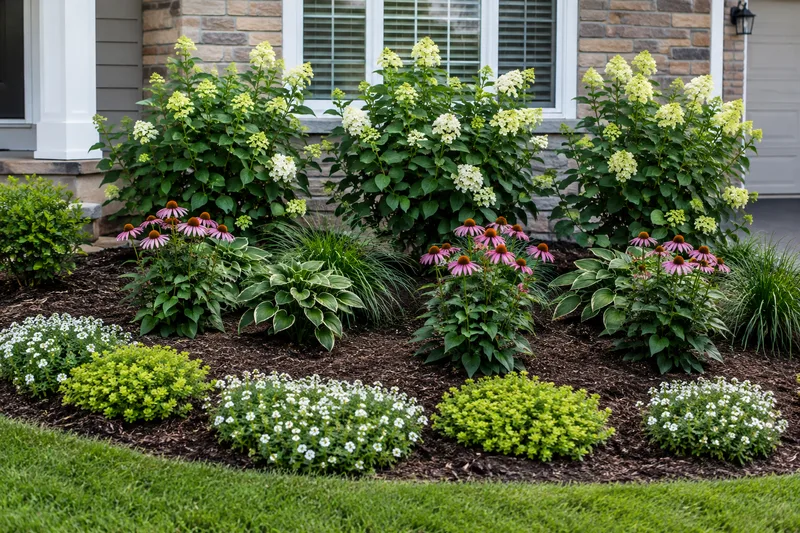
A row of one low plant along the front of a bed gives a soft, green edge. It does not stop grass by itself, so pair it with a spade-cut or metal edge if the bed meets lawn. Sizes and zones below come from the North Carolina State Extension Gardener Plant Toolbox.
| Plant | Height | USDA zones | Light | Note |
|---|---|---|---|---|
| Catmint (Nepeta x faassenii) | 18 to 24 in | 5 to 9 | Sun to part shade | Lavender-blue flowers; shear to tidy |
| Coral bells (Heuchera) | 6 to 20 in | 3 to 9 | Sun or part shade | Colored leaves, evergreen to semi-evergreen |
| Creeping phlox (Phlox subulata) | 4 to 6 in | 3 to 9 | Full sun | Spring flowers; spreads into a mat |
| Creeping stonecrop (Sedum spurium) | 2 to 6 in | 3 to 9 | Full sun to part shade | Good for dry, sunny edges |
| Pennsylvania sedge (Carex pensylvanica) | 1 to 8 in | 3 to 8 | Shade | Grassy edge for dry shade |
Boxwood is the classic low hedge for edging, but NC State notes it is susceptible to boxwood blight and leaf spot. If you choose it, inspect plants for leaf spots before buying.
How to choose the right edging
- Match the house. Brick by a brick house, stone near stone steps, metal for a modern look.
- Look at the shape. For long curves, choose metal, plastic, small stones or a spade-cut edge. Rigid timbers suit straight lines.
- Think about mowing. Next to lawn, a flat edge level with the grass saves trimming.
- Consider what is inside the bed. Gravel and loose rock need a solid, continuous edge. Bark mulch is easier to hold back.
- Be honest about effort. Stone and brick take more work to lay but little upkeep after. A spade-cut edge is easy to make but needs re-cutting.
How to install flower bed edging
- Mark the line. Lay a garden hose where the edge will go and look at it from the house and the street. Adjust until the curves look smooth.
- Cut the turf. Use a flat spade to cut along the hose, then remove the grass on the bed side.
- Dig a trench. Make it as deep and wide as the edging needs, using the maker's guide for metal and plastic.
- Set the edging. Place stones, bricks or edging strip in the trench. Check the height against the lawn as you go.
- Backfill and firm. Fill soil back against both sides and press it down so the edge does not move.
- Mulch the bed. Spread mulch inside the edge, keeping it off plant stems, as University of Massachusetts Extension advises.
Common questions
What is the easiest flower bed edging to install?
A spade-cut edge needs no materials. Of the built edges, plastic and light metal strips are usually the quickest to put in, because they come in long lengths and bend to shape.
What edging lasts the longest?
Stone, brick and metal outlast wood and thin plastic. Wood rots in time, and thin plastic can lift out of the ground.
Does edging stop weeds?
Edging slows lawn grass from creeping into the bed. It does not stop weed seeds that blow in, so mulch and weeding are still needed.
Related guides
- Front Yard Flower Bed Ideas: the full guide this post belongs to.
- Flower Bed Ideas for the Front of a House: how to lay out a bed along the house.
- Walkway Materials Compared: pavers, concrete, stone and gravel for paths.
Sources
- US Environmental Protection Agency, Creosote.
- University of Massachusetts Amherst Extension, Landscaping to Conserve Water.
- North Carolina State Extension Gardener Plant Toolbox: catmint, coral bells, creeping phlox, creeping stonecrop, Pennsylvania sedge and boxwood.