
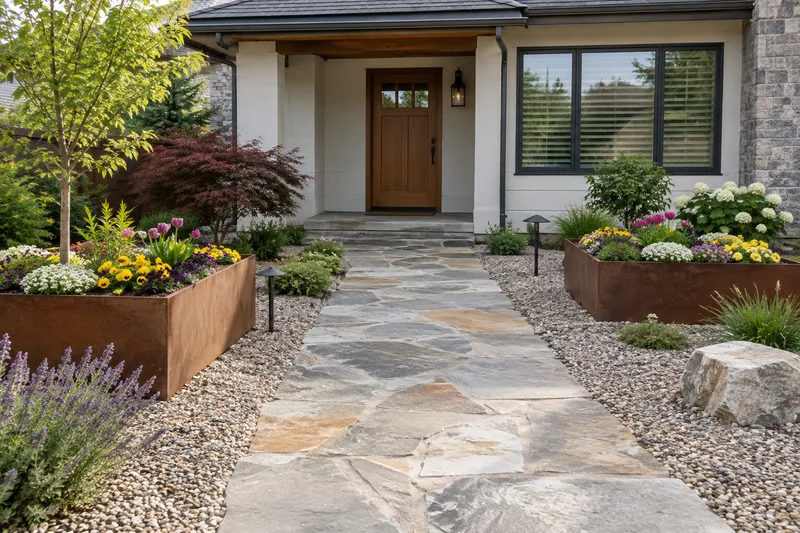
The best lawn alternatives for a front yard are low ground covers, clover or mixed lawns, and no-mow grasses and sedges. Beds of perennials and shrubs, and hard surfaces such as gravel or pavers, work too. Which one fits depends on three things: how much sun the area gets, how often people walk on it, and how neat you want it to look from the street. Most front yards end up with a mix, such as ground cover in the beds and a firm path where people walk.
This guide covers flat front yards. Every option below still needs some care, especially in the first year while plants fill in.
Lawn alternatives compared
Use this table to narrow the choice before picking plants. The light and foot traffic notes come from North Carolina State Extension plant pages where they give them.
| Option | Light | Foot traffic | Mowing | Best for |
|---|---|---|---|---|
| White clover, alone or mixed into grass | Sun to part shade | Tolerates foot traffic | Regrows quickly after mowing | A green, lawn-like look with less feeding |
| Fine fescue (red fescue) | Sun to part shade | Slow to recover from damage | Can be mowed or left long for a meadow look | Cool, northern yards (zones 3 to 6) |
| Pennsylvania sedge | Shade | Will not take heavy traffic | Once or twice a season, to about 2 inches | Dry shade under trees |
| Creeping thyme | Full sun | Use stepping stones | None | Small sunny areas and gaps between pavers |
| Creeping phlox | Full sun | Use stepping stones | None | A carpet of spring color at the front edge |
| Perennial and shrub beds | Any, with the right plants | None; add a path | None | Color and height near the house |
| Gravel or pavers | Any | Heavy | None | Paths, parking and sitting areas |
Replace lawn with ground cover
Ground covers are low plants that spread to cover the soil, so there is nothing to mow. They suit areas that people look at more than walk on. To replace lawn with ground cover, match the plant to the light first, then to how fast you need it to fill in. Sizes and zones below come from the NC State Extension Gardener Plant Toolbox.
| Ground cover | Height | Spread | USDA zones | Light | Note |
|---|---|---|---|---|---|
| Creeping thyme (Thymus serpyllum) | 2 to 3 in | 3 to 12 in | 4 to 9 | Full sun | Pink to purple summer flowers; rots in wet soil |
| Creeping phlox (Phlox subulata) | 4 to 6 in | 2 to 3 ft | 3 to 9 | Full sun | Blooms April to early May |
| Creeping stonecrop (Sedum spurium) | 2 to 6 in | 2 to 3 ft | 3 to 9 | Full sun to part shade | Prefers very dry soil |
| Creeping juniper (Juniperus horizontalis) | 0.5 to 1.5 ft | 4 to 10 ft | 3 to 9 | Full sun | Evergreen; drought tolerant in well-drained soil |
| Pennsylvania sedge (Carex pensylvanica) | 1 to 8 in | 1 to 12 in | 3 to 8 | Shade | Native; dry to moist shade |
| Sweet woodruff (Galium odoratum) | 6 to 12 in | 1 to 2 ft | 4 to 8 | Part to full shade | White spring flowers; can spread aggressively |
Fast spreaders cover ground quickly but can creep into beds and paths. Sweet woodruff, for example, spreads by rhizomes and seed and can be aggressive in ideal conditions. A firm edge keeps it in place. Before planting any ground cover, check your state's invasive plant list.
Clover lawn: pros and cons
A clover lawn, or clover mixed into grass, stays green and soft and still looks like a lawn. White clover grows about 4 to 6 inches tall and handles sun to part shade, according to NC State Extension.
- It feeds the soil. Clover fixes nitrogen, which is why it is also grown as a cover crop.
- It handles feet. NC State lists it as tolerating foot traffic.
- It feeds bees. The flowers attract native bees and honey bees. That is good for pollinators, but think about bare feet in a play area.
- It spreads. Clover spreads by rooting along its stems and is often treated as a lawn weed, so keep it away from beds you want clean.
If you have a homeowners association, check its rules before switching. Some set standards for front lawns.
No mow front yard options
A no mow front yard does not have to look wild. Two plants make it easier:
- Fine fescue. NC State says red fescue is highly tolerant of shade and drought tolerant, and can be mowed or left natural for a meadow look. It grows best in zones 3 to 6 and can suffer from summer diseases in hot climates.
- Pennsylvania sedge. A native sedge for dry to moist shade. NC State suggests mowing only once or twice a season to keep it about 2 inches tall. It will not take heavy foot traffic.
Denver Water lists buffalo grass, blue grama grass, turf-type tall fescue and fine fescues as lower-water turf for its dry climate. A mowed strip along the sidewalk and a crisp edge make a longer, softer lawn look intended rather than neglected. Some towns have rules on grass height, so check local codes first.
Beds of perennials and shrubs
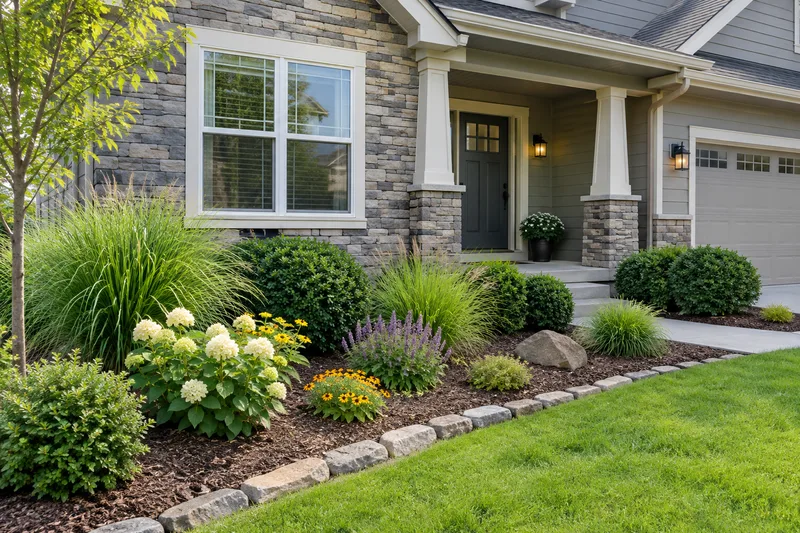
Turning part of the lawn into planting beds adds color and height that no lawn can. Use evergreen shrubs for winter structure, long-lived perennials for color, and mulch to cover the soil between them. Plant each kind in groups, and leave room for full-grown size. For plant ideas, see Low-Maintenance Flower Bed Plants and Front Yard Flower Beds.
Hard surfaces: gravel, pavers and patios
Where people walk, park or sit, a hard surface beats any plant. Gravel drains well and is quick to lay. Pavers and flagstone give a firmer, more formal surface. A small paved sitting area near the door can replace a patch of grass nobody uses. For how to mix rock and mulch, read Front Yard Landscaping with Rocks and Mulch.
How to replace a front lawn, step by step
- Map sun, shade and paths. Watch where people actually cut across the yard. Those lines become paths, not planting.
- Pick a small first area. Replacing lawn in stages spreads the cost and the work.
- Remove the grass. Dig out the turf, or smother it under cardboard topped with mulch until it dies. Grass left alive grows up through new ground cover.
- Improve the soil. Denver Water says that for most soils, adding 1 to 2 inches of compost or other organic material, worked 6 inches deep, can improve the soil.
- Lay paths and edging first. Then plant, so you do not trample new beds.
- Plant, mulch and water. Keep new plants watered until they are established, and weed often in the first season while gaps close.
Common questions
What is the cheapest lawn alternative?
There is no single answer, because prices for seed, plants and gravel vary by region. Keeping the grass and adding clover, or replacing the lawn in small stages, spreads the cost over several seasons.
What lawn alternative can you walk on?
Of the plants above, white clover is listed as tolerating foot traffic. For daily walking, a path of gravel, pavers or stepping stones is the most reliable choice.
Will a lawn alternative save water?
It can. University of Massachusetts Extension advises grouping plantings by similar water needs and watering lawn separately from other plantings, so each area gets only what it needs. New plantings still need regular water while they settle in.
Related guides
- Low-Maintenance Front Yard Landscaping Ideas: the full guide this post belongs to.
- Front Yard Landscaping with Rocks and Mulch: rock, gravel and mulch in the front yard.
- Water-Saving Landscape Design: layouts that use less water.
Sources
- North Carolina State Extension Gardener Plant Toolbox: white clover, red fescue, Pennsylvania sedge, creeping thyme, creeping phlox, creeping stonecrop, creeping juniper and sweet woodruff.
- Denver Water, Xeriscape Principles.
- University of Massachusetts Amherst Extension, Landscaping to Conserve Water.