
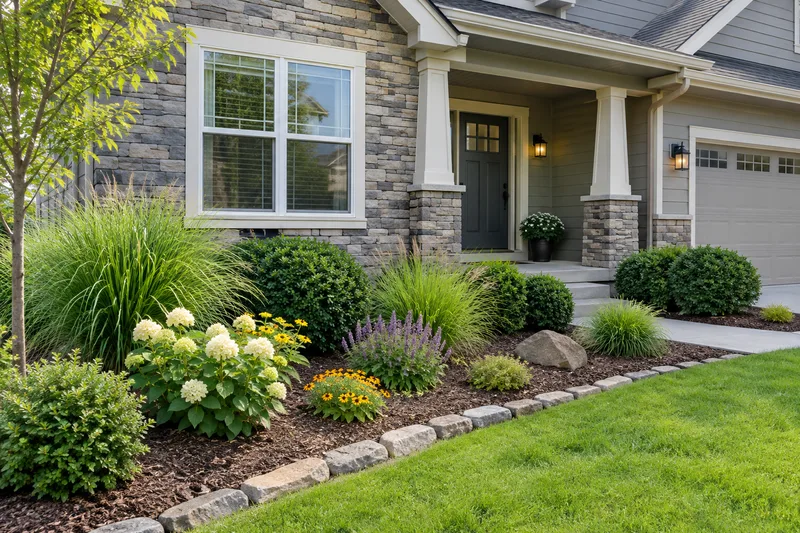
The best low maintenance flower bed plants are tough perennials such as purple coneflower, black-eyed Susan, catmint, meadow sage and sedum. Native grasses such as little bluestem and switchgrass, and compact shrubs such as inkberry and panicle hydrangea, are just as easy. They come back every year, cope with dry spells once established, and need little more than a yearly cut-back. The catch is fit: a plant is only easy when it suits your sun, soil and USDA zone.
A bed that mixes all three groups looks good longer than a bed of flowers alone. Shrubs hold the shape in winter, grasses add movement and fall color, and perennials bring the flowers.
What makes a flower bed plant low-maintenance?
- It suits the site. A sun plant in shade, or a dry-soil plant in wet clay, will struggle no matter how much care it gets.
- It handles dry spells once established. Less watering after the first season.
- It stays in its space. No aggressive spreading into paths or other plants.
- It stands up on its own. No staking in most gardens.
- It shrugs off pests. Deer and rabbit resistance matters in many US yards.
- It is long-lived. No replanting every few years.
Easy flower bed plants at a glance
Heights, zones, light and bloom times come from the North Carolina State Extension Gardener Plant Toolbox. Full sun means 6 or more hours of direct sun a day; part shade means about 2 to 6.
| Plant | Type | Height | USDA zones | Light | Bloom or show |
|---|---|---|---|---|---|
| Purple coneflower (Echinacea purpurea) | Perennial | 3 to 4 ft | 3 to 8 | Sun to part shade | June to August |
| Black-eyed Susan (Rudbeckia fulgida) | Perennial | 2 to 3 ft | 3 to 9 | Full sun | August to October |
| Catmint (Nepeta x faassenii) | Perennial | 18 to 24 in | 5 to 9 | Sun to part shade | Spring into summer |
| Meadow sage (Salvia nemorosa) | Perennial | 1.5 to 3 ft | 4 to 8 | Sun to part shade | June to September |
| Threadleaf coreopsis (Coreopsis verticillata) | Perennial | 2.5 to 3 ft | 3 to 9 | Sun to part shade | May to July |
| Sedum (Hylotelephium telephium) | Perennial | 2 to 2.5 ft | 3 to 9 | Full sun | August to October |
| Daylily (Hemerocallis) | Perennial | 1 to 3 ft | 3 to 9 | Sun to part shade | Spring through summer, by cultivar |
| Blue false indigo (Baptisia australis) | Perennial | 3 to 4 ft | 3 to 9 | Full sun | Late spring |
| Arkansas blue star (Amsonia hubrichtii) | Perennial | 2 to 3 ft | 5 to 8 | Sun to part shade | Spring flowers, gold fall color |
| Little bluestem (Schizachyrium scoparium) | Grass | 2 to 4 ft | 3 to 9 | Full sun | Copper fall color into winter |
| Switchgrass (Panicum virgatum) | Grass | 3 to 4 ft | 5 to 9 | Full sun | Flower plumes summer to fall |
| Inkberry (Ilex glabra) | Evergreen shrub | 5 to 10 ft; 'Shamrock' 3 to 5 ft | 4 to 11 | Sun to part shade | Year-round leaves |
| Panicle hydrangea (Hydrangea paniculata) | Shrub | 8 to 15 ft; 'Rensun' 4 to 5 ft | 3 to 8 | Sun to part shade | Summer into fall |
| Shrubby cinquefoil (Dasiphora fruticosa) | Shrub | 2 to 4 ft | 3 to 7 | Full sun | June to September |
| Hosta | Perennial | 4 in to 2.5 ft | 3 to 9 | Part to deep shade | Leaves; summer flowers |
| Coral bells (Heuchera) | Perennial | 6 to 20 in | 3 to 9 | Sun or part shade | Colored leaves |
Perennials for flower beds
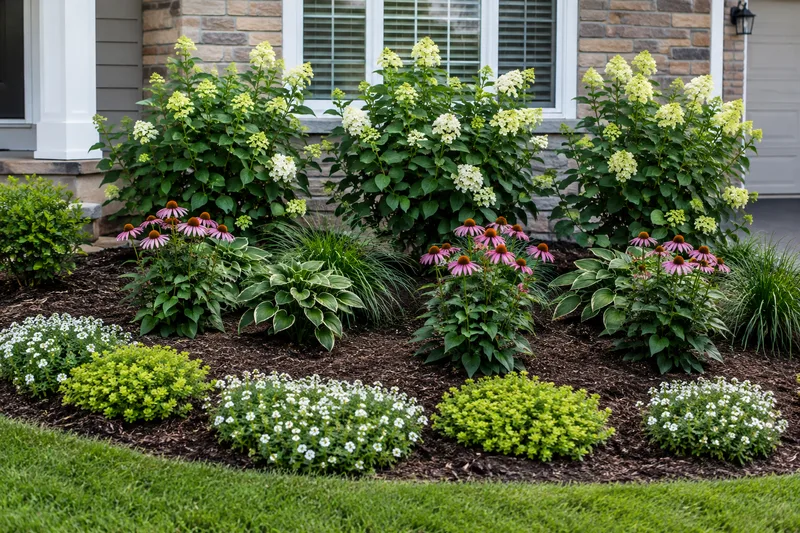
Perennials carry most of the color in an easy bed. These are among the least fussy, based on what NC State Extension lists for each.
Purple coneflower
Pinkish-purple daisies from June to August, on plants 3 to 4 feet tall. It is drought tolerant once established and listed as deer resistant. Leave the seed heads in fall for birds and winter interest.
Black-eyed Susan
Yellow-orange flowers with dark centers from August to October, when many perennials are fading. It tolerates drought and dry soil once established, and deer browse it only occasionally.
Catmint
A soft mound of lavender-blue flowers from spring into summer. It is drought tolerant in well-drained soil, and its strong scent deters deer. Shearing after the first flush brings more flowers.
Meadow sage
Spikes of violet-blue flowers in flushes from June to September. It handles dry soil and is seldom damaged by deer or rabbits.
Threadleaf coreopsis
Fine, airy leaves and small yellow flowers from late spring through summer. It tolerates drought and poor soil. NC State notes that soil that is too rich or wet makes the stems weak and floppy, so skip the fertilizer.
Sedum
Thick leaves store water, so it rarely needs watering once settled. Flat heads of pink to purplish red flowers open from August to October and fade to burgundy brown.
Blue false indigo and Arkansas blue star
Both are long-lived and deer resistant. Blue false indigo has a deep taproot that makes it drought tolerant but hard to move, so plant it where it can stay. Arkansas blue star has blue spring flowers and leaves that turn gold in fall, brightest in full sun.
For perennials chosen for the longest bloom, see Long-Blooming Perennials.
Ornamental grasses that need little care
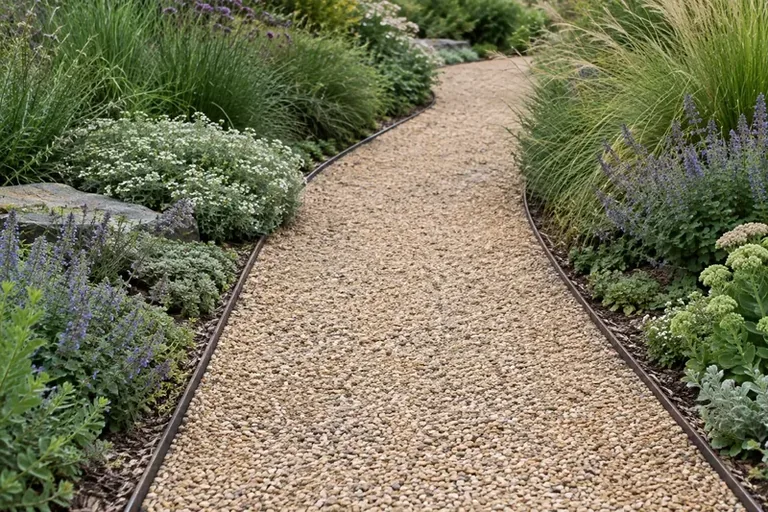
Native grasses give a bed height and movement, and they look good long after the flowers finish.
- Little bluestem. Grows 2 to 4 feet in full sun. NC State says it has excellent drought resistance once established, and its copper to gold fall color lasts into winter.
- Switchgrass. Usually 3 to 4 feet, taller with its flower plumes. It tolerates dry soil, turns yellow to orange in fall and stands through winter. In shade the stems may flop.
The only yearly job is cutting the old stems down in late winter or early spring, before new growth starts.
Low-care shrubs for the back of the bed
- Inkberry. A broadleaf evergreen for sun to part shade. The species grows 5 to 10 feet, so choose a compact cultivar such as 'Shamrock' (3 to 5 feet) for a bed. It can sucker into small colonies.
- Panicle hydrangea. Creamy white summer flowers that age to pink. It flowers on new wood, so it can be pruned hard in late winter or spring without losing the year's flowers. The species is large; compact cultivars such as 'Rensun' stay about 4 to 5 feet.
- Shrubby cinquefoil. Small yellow flowers from June to September on a 2 to 4 foot shrub, and drought tolerant. NC State notes that it struggles in the humid heat of the Southeast and does best where summers are cooler.
Plants for a drought tolerant flower bed
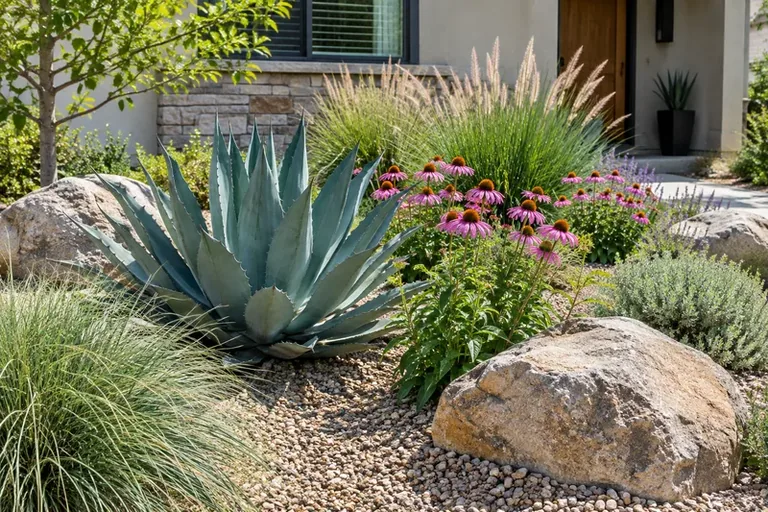
For a dry, sunny bed, start with the plants NC State lists as drought tolerant once established: purple coneflower, black-eyed Susan, catmint, meadow sage, threadleaf coreopsis, sedum, blue false indigo, little bluestem and switchgrass. English lavender also fits if the soil drains well; NC State says it will not survive wet feet or heavy clay.
Group these plants together, away from thirstier ones, so one watering schedule suits the whole bed. University of Massachusetts Extension advises grouping plantings by similar water needs. Every new plant still needs regular water in its first season. For whole-yard ideas, see Drought-Tolerant Landscapes.
Easy plants for a shady bed
Shade beds have their own easy plants. Hostas grow in part to deep shade, though deer and rabbits eat the leaves. Coral bells add purple, orange or yellow leaves in sun or part shade. Lenten rose flowers in late winter in part to full shade and resists deer, but its leaves and roots are toxic if eaten. For a low, grassy edge in dry shade, Pennsylvania sedge is a native choice.
Easy plants that can cause work
Some plants sold as easy bring jobs of their own. Check these before planting:
- Yarrow (Achillea millefolium). Tough and drought tolerant, but NC State notes it can spread aggressively by rhizomes and seed.
- Sweet woodruff. A pretty shade ground cover that can be aggressive in ideal conditions.
- Daylily. Easy to grow, but frequently damaged by deer.
- Boxwood. A classic edging shrub, but susceptible to boxwood blight and leaf spot.
- Lavender in clay. It needs excellent drainage and fails in wet, heavy soil.
Also check your state's invasive plant list before buying any spreading plant.
Three easy bed plans to copy
These mixes use only plants from the table above. Adjust the numbers to the length of your bed, and keep each plant in a group.
Sunny, dry bed
- Back: a row of little bluestem or switchgrass.
- Middle: drifts of purple coneflower and black-eyed Susan, so the bed flowers from June into October.
- Front: catmint and sedum along the edge.
Sun to part shade bed along the house
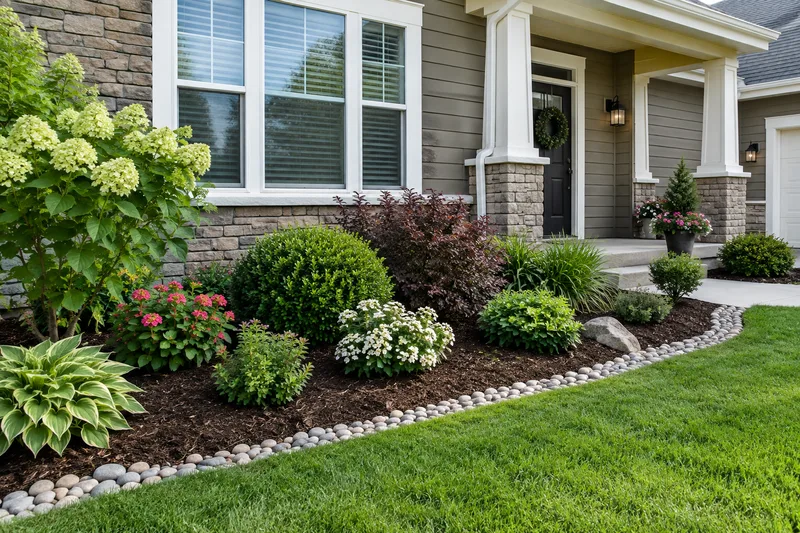
- Back: compact inkberry for evergreen shape, with one compact panicle hydrangea at a corner.
- Middle: meadow sage and threadleaf coreopsis.
- Front: coral bells for leaf color.
Shady bed
- Back and middle: large hostas, if deer are not a problem.
- Front: Lenten rose for late winter flowers and coral bells for leaf color.
- Edge: Pennsylvania sedge in dry shade.
Common questions
What is the easiest perennial for a flower bed?
There is no single answer for every yard, but purple coneflower and black-eyed Susan are good places to start in sun. Both grow in zones 3 to 8 or 9 and are drought tolerant once established, according to NC State Extension.
Should a low-maintenance bed use annuals?
Annuals need replanting every year, so they add work. Use a few in a container by the door for quick color, and keep the bed itself for perennials, grasses and shrubs.
How to keep a low-maintenance bed easy
- Plant in groups. Three or more of each plant, spaced for their full-grown width.
- Mulch. Cover bare soil to slow weeds. Denver Water gives at least 4 inches for organic mulch. Keep it off stems.
- Water new plants. Water regularly in the first season, then only in long dry spells.
- Cut back once a year. Cut perennials and grasses down in late winter or early spring.
- Skip extra fertilizer. Many of these plants, such as coreopsis, flop in soil that is too rich.
Related guides
- Front Yard Flower Bed Ideas: the full guide this post belongs to, with plants by season.
- Long-Blooming Perennials: perennials picked for the longest flowering.
- Flower Bed Ideas for the Front of a House: how to lay out a bed along the house.
- Best Drought-Tolerant Plants for a Resilient Yard: more plants for dry yards.
Sources
- North Carolina State Extension Gardener Plant Toolbox: purple coneflower, black-eyed Susan, catmint, meadow sage, threadleaf coreopsis, sedum, daylily, blue false indigo, Arkansas blue star, little bluestem, switchgrass, inkberry, panicle hydrangea, shrubby cinquefoil, hosta, coral bells, Lenten rose, Pennsylvania sedge, English lavender, yarrow, sweet woodruff and boxwood.
- University of Massachusetts Amherst Extension, Landscaping to Conserve Water.
- Denver Water, Xeriscape Principles.