
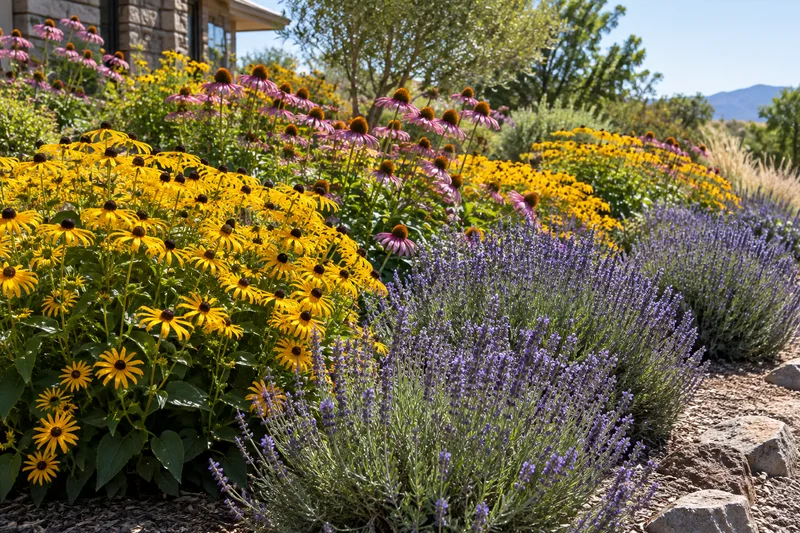
Long blooming perennials flower for months instead of a few weeks. For full sun, some of the longest bloomers are catmint, 'Caradonna' salvia, 'Butterfly Blue' pincushion flower, 'Stella de Oro' daylily, black-eyed Susan, yarrow and purple coneflower. Several keep going even longer if you remove faded flowers.
The table below gives the bloom months, height and USDA zones for 15 of the best, followed by short notes on each and simple ways to stretch the show.
What makes a perennial long blooming?
Most perennials have one flush of flowers. A garden peony, for example, blooms in May and is done for the year. A long bloomer either flowers steadily for months or sends up new flowers after the first ones fade.
Catmint is a good example. The Missouri Botanical Garden lists 'Walker's Low' as blooming from April to September, and shearing the spent flower spikes after the first bloom encourages more. Plants like this carry a bed while shorter bloomers come and go around them.
Long flowering perennials for full sun
Bloom months, heights and zones come from the Missouri Botanical Garden Plant Finder, which reports bloom times for St. Louis. Expect earlier flowers in warm regions and later ones in cold regions. Check your zone on the USDA Plant Hardiness Zone Map.
| Perennial | Bloom time | Height | USDA zones | For more flowers |
|---|---|---|---|---|
| Catmint ('Walker's Low') | April to September | 2 to 2.5 ft | 4 to 8 | Shear after the first flush |
| Pincushion flower ('Butterfly Blue') | April to frost | 1 to 1.5 ft | 5 to 9 | Remove spent flowers |
| Salvia ('Caradonna') | May to September | 1 to 2 ft | 4 to 8 | Deadhead for repeat bloom |
| Daylily ('Stella de Oro') | May to August | 9 to 12 in | 3 to 10 | Rated low maintenance |
| Purple coneflower | June to August | 2 to 5 ft | 3 to 8 | Deadhead, or leave seed heads to self-seed |
| Yarrow (Achillea millefolium) | June to September | 2 to 3 ft | 3 to 9 | Cut back in late spring to limit flopping |
| Yarrow ('Moonshine') | June to September | 1 to 2 ft | 3 to 8 | Deadhead; cut back after bloom |
| Black-eyed Susan ('Goldsturm') | June to September | 2 to 3 ft | 3 to 9 | Spreads slowly into a clump |
| Blanket flower (Gaillardia x grandiflora) | June to September | 2 to 3 ft | 3 to 10 | Short-lived; may need replacing |
| Coreopsis ('Moonbeam') | June to August | 1.5 to 2 ft | 3 to 9 | Sterile, so no unwanted seedlings |
| Calamint (Calamintha nepeta) | June to October | 1 to 1.5 ft | 5 to 7 | Cut back after flowering |
| Russian sage | July to October | 3 to 5 ft | 5 to 9 | Rated low maintenance |
| Garden phlox ('David') | July to September | 2 to 4 ft | 3 to 8 | Deadhead to prolong bloom |
| Shasta daisy ('Becky') | July to September | 3 to 4 ft | 5 to 9 | Deadhead; stems do not need staking |
| Anise hyssop ('Blue Fortune') | July to September | 2 to 3 ft | 5 to 9 | Deadhead spent flowers |
Perennials that bloom all summer
These are the standouts for color from early summer into fall.
Catmint
Soft lavender-blue flowers over gray-green leaves, from spring to early fall. 'Walker's Low' tolerates drought, deer and rabbits. Its seeds are sterile, so it does not spread by seed.
'Caradonna' salvia
Upright blue-violet spikes from May to September. Cut it back after a flush of flowers, or to the low leaves if it flops, and it blooms again.
'Butterfly Blue' pincushion flower
Small lavender-blue flowers on a compact plant, from April until frost in the Missouri Botanical Garden's listing. Remove spent flowers to keep it blooming.
'Stella de Oro' daylily
A short, yellow daylily known for its long bloom period. It suits front edges and tolerates part shade. Divide clumps every 3 to 4 years.
Black-eyed Susan and purple coneflower
Two prairie classics that flower through the heat of summer. Coneflower tolerates drought and clay soil. It self-seeds freely if some seed heads are left, so deadhead if you do not want seedlings.
Yarrow
Flat flower heads from June to September. Common yarrow can flop, so the Missouri Botanical Garden suggests cutting stems back in late spring to keep the plant shorter. 'Moonshine' stays more compact but tends to melt out in hot, humid summers.
Russian sage
Airy lavender-blue spires from July to October. It tolerates drought, clay soil, deer and rabbits, which makes it one of the easiest tall plants for a hot, dry spot.
Low maintenance long blooming perennials
If you want flowers with very little work, start with plants the Missouri Botanical Garden rates as low maintenance:
- Catmint 'Walker's Low'
- Salvia 'Caradonna'
- Daylily 'Stella de Oro'
- Purple coneflower
- Russian sage
- Pincushion flower 'Butterfly Blue'
- Shasta daisy 'Becky'
- Anise hyssop 'Blue Fortune'
Several of these also tolerate drought once established, including catmint, salvia, coneflower and Russian sage. That makes them a good fit for a sunny bed you do not want to water often.
How to get even more flowers
- Deadhead. Snip faded flowers before they set seed. The Missouri Botanical Garden recommends it for salvia, phlox, pincushion flower, Shasta daisy and anise hyssop.
- Shear after the first flush. Catmint and 'Moonshine' yarrow respond to a cut back after their first round of flowers with more bloom later.
- Give them sun. Most long bloomers flower best in full sun. In too much shade they stretch and bloom less.
- Divide crowded clumps. Smaller flowers and a dead center are signs a clump needs dividing. See when and how to divide perennials.
A simple all-summer planting
For a sunny bed that flowers from spring to fall, plant catmint and 'Butterfly Blue' pincushion flower along the front. Fill the middle with 'Caradonna' salvia, purple coneflower and black-eyed Susan. Put Russian sage or garden phlox at the back. Between them, these cover April to October in the Missouri Botanical Garden's bloom records. For a shady spot, see our list of flowering perennials for shade instead.
Common questions
What is the longest blooming perennial?
Among common sun perennials, catmint (April to September) and 'Butterfly Blue' pincushion flower (April to frost) have some of the longest bloom periods in the Missouri Botanical Garden's records.
Do long blooming perennials need deadheading?
Not all. Daylily 'Stella de Oro' and Russian sage flower for months with little help. Salvia, phlox and pincushion flower bloom longer when you remove faded flowers.
Are these perennials good for a cottage garden?
Yes. Catmint, phlox, yarrow, coneflower and Shasta daisy all appear in our guide to the best perennials for a cottage garden.
For more planning ideas, browse all of our perennial guides.
Sources
- Missouri Botanical Garden, Plant Finder (bloom times, heights, zones, maintenance and care notes).
- Clemson Cooperative Extension, Home and Garden Information Center, Dividing Perennials.
- USDA Agricultural Research Service, USDA Plant Hardiness Zone Map.