
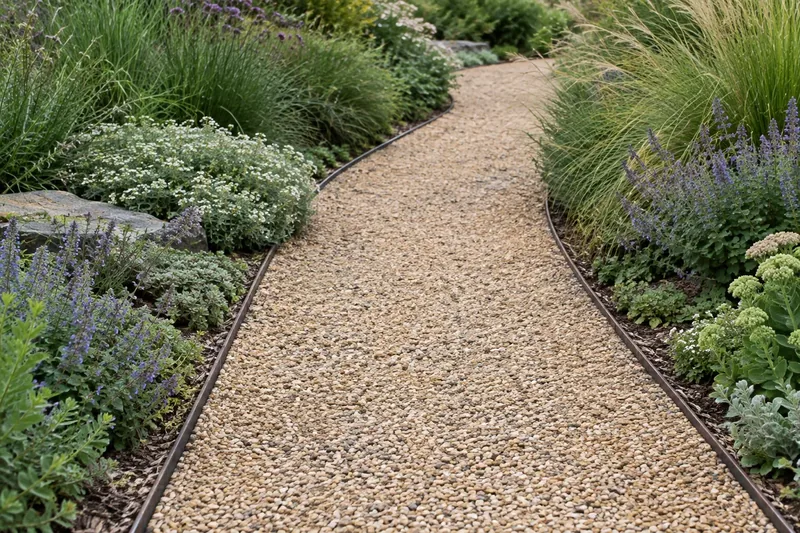
The core modern garden materials are concrete, steel and gravel, often warmed with wood or smooth-cut stone. Concrete gives flat, clean surfaces. Steel gives thin, crisp edges, planters and screens. Gravel covers large areas in one even texture for less money than paving. The modern look comes less from any single material than from choosing a few and repeating them.
Below, the main materials are compared in one table. Then each gets a closer look: concrete garden design, corten steel planters and edging, and the modern gravel garden. For the style as a whole, see our modern garden design guide.
Modern garden materials compared
This table sets the main materials side by side. Lifespans come from LawnStarter, and upkeep notes from Houzz, Gardenista and the US Federal Highway Administration. Prices vary too much by region and supplier to list, so get local quotes.
| Material | Best uses | Why it looks modern | Upkeep and lifespan | Watch out for |
|---|---|---|---|---|
| Poured concrete | Paths, terraces, steps, walls | One smooth, even surface | Lasts 30 to 50 years when properly maintained; seal every 4 to 5 years (LawnStarter) | Water cannot soak through, so plan drainage (Houzz); cracks with frequent freeze-thaw, and repairs show (LawnStarter) |
| Concrete pavers | Terraces, paths, stepping stones | Square-edged units in a grid | A well-installed paver path lasts 25 to 40 years; replace joint sand now and then (LawnStarter) | Costs more up front than poured concrete; joints need some weeding (Houzz) |
| Weathering (corten) steel | Edging, raised planters, screens, low walls | Thin profile and a warm rust color | Keep leaves, soil and plants from holding moisture against it (FHWA) | Runoff stains concrete; take care where it stays wet or meets salt (FHWA) |
| Pea gravel | Paths, courtyards, mulch around dry-garden plants | One even texture over a large area | Weed and clear debris (Houzz); replenish every 8 to 10 years (Gardenista) | Scatters without edging (Houzz); hard on feet and knees (LawnStarter) |
| Crushed stone and decomposed granite | Firm paths and courtyards | A compact, even surface | Top up as it wears (Houzz) | Decomposed granite can get muddy when wet and may not do well in freeze-thaw areas (Houzz) |
| Natural stone (sawn) | Paving, steps, walls | Square-cut slabs with clean edges | Durable for decades; most stone other than flagstone should be sealed about once a year (Houzz) | One of the more expensive options; holds heat in sun, though limestone stays cooler (Houzz) |
| Wood or composite | Benches, decks, screens | Long, straight boards add warmth | Choose boards made for outdoor use | Several wood tones in one yard look busy, so pick one |
Concrete garden design
Concrete is the most common base for a modern garden because it can be poured or cast into almost any clean shape: paths, terraces, steps, walls, benches and planters.
Poured concrete
Poured concrete gives one smooth surface with no joints to weed. Houzz notes that it is relatively easy to install and maintain, costs less than pavers and needs no edging once set. LawnStarter adds that it holds up well in hot climates and can be stained or stamped. The trade-offs: it cracks with frequent freeze-thaw cycles, and repairs are easy to see. Because water cannot soak through it, Houzz says proper drainage is essential to keep water from pooling.
Concrete pavers
Large pavers give the same clean look in a grid. Houzz notes that they are less prone to cracking than poured concrete and easy to repair, since one paver can be lifted and replaced. LawnStarter says individual pavers cope with freeze-thaw cycles. Permeable pavers let rain and snowmelt seep through to the soil and gravel layers below. The EPA says this reduces runoff and can help filter out pollutants.
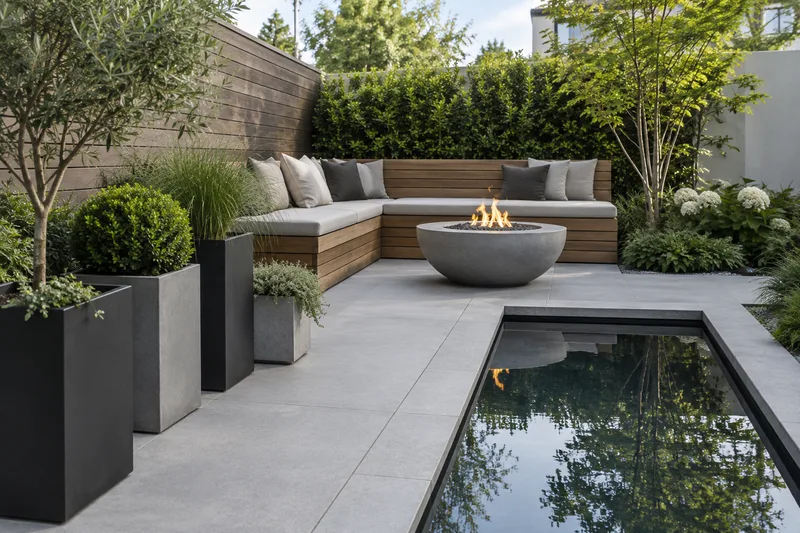
Concrete planters, walls and benches
Cast concrete planters and low walls repeat the paving's color and lines, as in the courtyard above. A bench built into a low wall saves space and keeps the outline simple. Pair the gray with wood seats or cushions so the space does not feel cold.
Corten steel planters and steel edging
Steel gives the thinnest, sharpest line of any garden material. Weathering steel, often sold as corten, is meant to develop a rust-brown oxide coating, and that coating is the look most people want.
Where corten steel planters and edging work
- Raised planters and tall square pots at entries and on terraces.
- Edging between gravel, lawn and planting beds.
- Low retaining walls and the edges of steps.
- Screens and sculptural panels.
What to watch for
Guidance from the US Federal Highway Administration (FHWA), written for bridges, raises points that also apply to a garden on a small scale:
- Staining. FHWA notes that drainage from uncoated weathering steel leaves dark, uneven stains on concrete. Set steel planters on gravel or soil, or seal the concrete below, which FHWA lists as one way to limit staining.
- Constant wetness. FHWA urges caution where the steel would stay wet most of the time. It advises removing debris that holds moisture and clearing plants that stop the steel from drying.
- Salt. FHWA flags salty coastal air and spray from deicing salt as risks.
Steel edging also solves gravel's biggest problem. Houzz notes that loose materials scatter unless they are held in by edging.
Gravel garden: the modern way
A modern gravel garden uses one gravel color across a large, clearly edged area, with plants set in groups or blocks. It needs no mowing and suits dry-garden plants such as agave, yucca and blue fescue.
Pea gravel, crushed stone or decomposed granite?
| Type | What it is like | Trade-off (Houzz) |
|---|---|---|
| Pea gravel | Small, rounded stones that crunch underfoot, in many colors | Scatters easily and rolls underfoot, so it works best in a contained area |
| Crushed stone | Jagged pieces that lock together | Firm when tightly packed and edged, but rough on bare feet |
| Decomposed granite | Fine granite compacted with a stabilizer | The longest-lasting, most solid loose surface, but it fades, can get muddy when wet and is more likely to be tracked indoors |
Laying a gravel garden for a modern look
- Edge it. Steel, concrete or a row of pavers keeps the lines crisp.
- Get the depth right. Denver Water recommends rock and gravel mulch at least 2 inches deep in planted areas.
- Skip black plastic. Denver Water says it keeps air and water from plant roots.
- Keep it off the lawn. LawnStarter notes that gravel which migrates onto grass can be a safety hazard when mowing.
- Plan top-ups. Gardenista says gravel needs replenishing every 8 to 10 years.
For plants that suit gravel, with sizes and zones, see Plants for a Modern Garden. For more low-water ideas, see Drought-Tolerant Landscapes.
Wood and stone: the softeners
A garden of only concrete and steel can feel cold. Wood and natural stone add warmth and texture.
- Wood. Long horizontal boards on benches, decks and screens echo modern lines. Choose one wood tone and repeat it.
- Stone. Sawn, square-cut slabs suit the style better than rough, irregular pieces. Houzz notes that natural stone is extremely durable but among the more expensive path materials. It can hold heat in the sun, which is hard on bare feet and paws, while limestone stays cooler.
How to combine modern garden materials
- Pick one main surface. Concrete pavers, poured concrete or sawn stone for the areas where people walk and sit.
- Add one loose material. Gravel for paths, courtyards or planted areas.
- Add one accent. Corten steel or wood for edges, planters and seats.
- Match the house. Take colors from the walls, window frames or roof.
- Keep surfaces level. Houzz suggests keeping paving materials at the same height and a similar size, so none dominates.
- Plan drainage first. Decide where rain from paving and steel will go before anything is built.
Combinations that work
- Gray concrete pavers, pea gravel and steel edging.
- A poured concrete terrace with a wood bench and a slatted wood screen.
- A gravel courtyard with corten planters of upright grass.
- Sawn stone paving with clipped boxwood and a concrete fire bowl.
For ideas at the front of the house, see Modern Front Yard Landscaping Ideas. For building basics, see Hardscaping Tips.
Questions about modern garden materials
What is the cheapest modern garden material?
Gravel is usually the least costly. Gardenista calls gravel and decomposed granite inexpensive, and Houzz notes that poured concrete costs less than pavers. Local prices vary, so compare quotes.
Does corten steel stain concrete?
It can. FHWA notes that drainage from uncoated weathering steel leaves dark stains on concrete. Place it where its runoff lands on gravel or soil.
Does concrete crack in cold winters?
Poured concrete can. LawnStarter notes that it cracks with frequent freeze-thaw cycles, while pavers cope better because each piece can move. Houzz suggests asking the installer how to prevent cold-weather cracking.
What goes under gravel?
Not black plastic. Denver Water advises against it because it keeps air and water from reaching plant roots.
For the full style, from layout to planting, see the Modern Garden Design guide.
Sources
- LawnStarter, 12 Materials to Consider for Your Garden Path.
- Marianne Lipanovich, Houzz, Popular Materials for Garden Paths and Walkways and Lay of the Landscape: Modern Garden Style.
- US Federal Highway Administration, Technical Advisory T 5140.22 on uncoated weathering steel.
- US Environmental Protection Agency, Soak Up the Rain: Permeable Pavement.
- Denver Water, Xeriscape Principles.
- Gardenista, Hardscaping 101: Front Paths.