
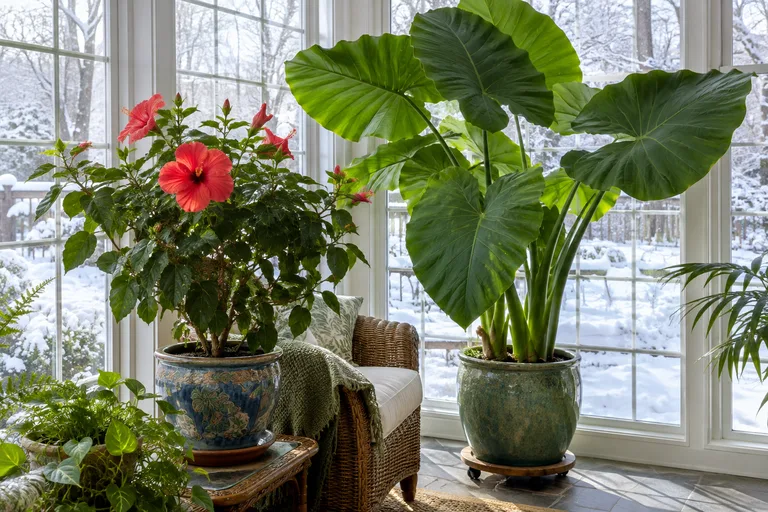
Overwintering tropical plants means keeping tender plants alive until spring in one of three ways. Bring them indoors as houseplants, let them go dormant in a cool, frost-free space, or dig up and store their roots. Start planning when nights drop into the 50s Fahrenheit, and move plants before nights regularly fall below 45 degrees.
It is worth the effort. Plants kept over winter save buying new ones each spring, and they start the next season larger. The steps below come from university extension services, named in each section and listed at the end.
Three ways to overwinter, and which plants suit each
The right method depends on the plant. University of Illinois Extension sorts tropicals into groups by how they grow, and the other sources below follow the same idea.
| Method | Best for | Where | Water |
|---|---|---|---|
| Grow as a houseplant | Palms, small hibiscus, bougainvillea in small pots | A sunny window | When the soil is dry |
| Let the whole plant go dormant | Mandevilla, lantana, large hibiscus and bougainvillea | Cool, dark and frost-free, about 40 to 50°F | Lightly, every few weeks at most |
| Store the roots | Cannas, elephant ears, caladiums, begonias | Cool, dark and dry, in a box or crate | None, but check for rot |
| Take cuttings | Coleus, begonias | The sunniest window | Keep the soil on the dry side |
Sources: University of Illinois Extension, University of Missouri Extension and Iowa State University Extension.
When to bring tropical plants indoors
Timing depends on the method, but all of it happens in early to mid fall:
- Start planning before nights regularly fall into the mid to low 50s, as University of Maryland Extension advises.
- Move live plants indoors when night temperatures regularly fall below 45°F, to avoid chill injury, says University of Missouri Extension. Iowa State says to bring them in before a hard freeze.
- Dig roots and tubers after frost. Cannas and elephant ears are lifted once frost has killed or yellowed the leaves.
Check for pests before you bring plants in
Pests can ride indoors on plants that spent the summer outside. Check every plant before it comes in.
- Look closely. University of Maryland Extension names scale, mealybugs, aphids, whiteflies and spider mites as the pests to watch for.
- Watch for mites. University of Missouri Extension calls mites the main concern. Look for pale or stippled leaves, and use a hand lens.
- Treat first. University of Maryland Extension suggests a horticultural oil or insecticidal soap labeled for houseplants before the move.
How to overwinter cannas
Cannas are stored as roots (rhizomes) in cold zones. NC State Extension says plants are injured if left in the ground below 25°F, and advises lifting them in zones 6a and 6b.
- Cut the plants to the ground right after the first frost.
- Dig the clumps of rhizomes with a garden fork.
- Let them dry for a few days in a shaded spot out of the rain, then brush off the soil.
- Pack them in a dry material such as peat or vermiculite, in a breathable box or crate.
- Store them in a cool, dry place that stays above 40°F. Iowa State gives 40 to 55°F.
- Check them now and then over winter, and throw out any that rot.
In zone 8, NC State Extension suggests a layer of mulch instead of lifting. In spring, replant after the last frost, 4 to 6 inches deep.
How to store elephant ear bulbs
Elephant ears grow from corms or tubers, often called bulbs. University of Maryland Extension gives these steps for elephant ears and caladiums:
- Once frost yellows the leaves, cut them off at ground level.
- Dig the tubers carefully so you do not damage them.
- Brush off the soil. Do not wash them.
- Cure them in a dry spot for about 7 to 10 days, in one layer on a screen, cardboard or newspaper. Turn them now and then.
- Store them in a mesh-bottom tray, crate or ventilated box, not touching, covered with dry potting soil or shredded paper.
- Keep them in a cool, dry, frost-free place. If they start to shrivel, mist them lightly. Throw out any that rot.
Caladiums need a little more warmth: NC State Extension says to store them at 45°F or warmer. Potted Alocasia can simply be brought inside before the first frost, with less water through winter.
Wear gloves when handling elephant ears. NC State Extension lists Colocasia and Alocasia as poisonous, and Alocasia can irritate skin.
Bring tropical plants indoors as houseplants
Plants that stay green all winter need the brightest spot you have.
- Hibiscus. University of Missouri Extension says small plants in a sunny window should bloom now and then through winter. Cutting back first removes the flower buds already formed.
- Palms. They adjust well to lower indoor light, though older leaves may yellow and drop.
- Light and drafts. Iowa State advises a sunny spot away from drafts, with water when the soil is dry. University of Maryland Extension suggests adding grow lights if needed.
- Cold glass. University of Illinois Extension warns to keep leaves from touching cold windows, which can damage them.
Dormant storage for woody tropicals
If you lack a sunny window, many woody tropicals can rest in the dark instead. University of Illinois Extension describes the method for mandevilla and lantana:
- After the first frost, cut the plant back to about 6 inches.
- Pot the root ball if it was in the ground.
- Store it in a cool, dark place. Iowa State gives 40 to 50°F for dormant tropicals.
- Water lightly, every few weeks at most.
The leaves will drop, which is normal. University of Missouri Extension says dormant hibiscus roots should stay "barely moist", and large bougainvillea should not dry out or be overwatered.
Save coleus and begonias from cuttings
Soft-stemmed plants are easier to keep as cuttings than as whole plants. University of Illinois Extension suggests rooting cuttings in well-drained potting mix and growing them in the sunniest window. NC State Extension says coleus cuttings root easily in water or clean potting soil. Keep the soil on the dry side through winter.
Waking plants up in spring
- Dormant plants: about a month before the last frost, move them into light and water more (University of Illinois Extension). Iowa State suggests stepping up to brighter light over 2 to 4 weeks.
- Feeding: University of Maryland Extension suggests a water-soluble houseplant fertilizer once plants are back in a sunny spot in April.
- Tubers: pot them up indoors in late February for an early start (University of Maryland Extension), or plant outside once the soil is above 65°F (University of Illinois Extension).
- Cannas: replant after the last frost, 4 to 6 inches deep and 12 inches to 3 feet apart (NC State Extension).
- All plants: after the last frost, harden them off outdoors before they go back into the garden (University of Illinois Extension).
Plants that can stay outside
Some tropical-looking plants never need to come in. Hardy banana (Musa basjoo) survives in the ground in zones 5 to 10. NC State Extension advises cutting the stems to about 2 feet after frost, wrapping them, and mulching the base. Needle palms, hostas and hardy ferns also stay outdoors. See Tropical-Looking Plants for Cold Climates for the full list with zones.
Common mistakes
- Waiting too long. University of Missouri Extension warns of chill injury once nights fall below 45°F.
- Bringing pests indoors. Check and treat every plant first.
- Overwatering dormant plants. University of Maryland Extension advises against letting them sit in wet soil.
- Washing tubers. Brush the soil off instead, and cure them before storage.
- Storing cannas too cold. Keep them above 40°F.
- Packing tubers together. Keep stored tubers from touching, as University of Maryland Extension advises.
More guides on Yard and Soil
- Tropical Garden Ideas: the full guide to tropical garden style in any climate.
- Tropical-Looking Plants for Cold Climates: what survives winter in the ground.
- Bold Foliage Plants for a Tropical Look: big, colorful leaves for sun and shade.
- Tropical Backyard Ideas for Small Yards: patios and courtyards.
Sources
- Austin Little, University of Illinois Extension, Overwintering tropical plants.
- University of Missouri Extension, Overwintering tropical plants.
- University of Maryland Extension, Overwintering Tropical Plants.
- Iowa State University Extension and Outreach, How to Overwinter Plants.
- NC State Extension, Extension Gardener Plant Toolbox: Canna, Caladium bicolor, Alocasia, Colocasia esculenta, Coleus and Musa basjoo.