
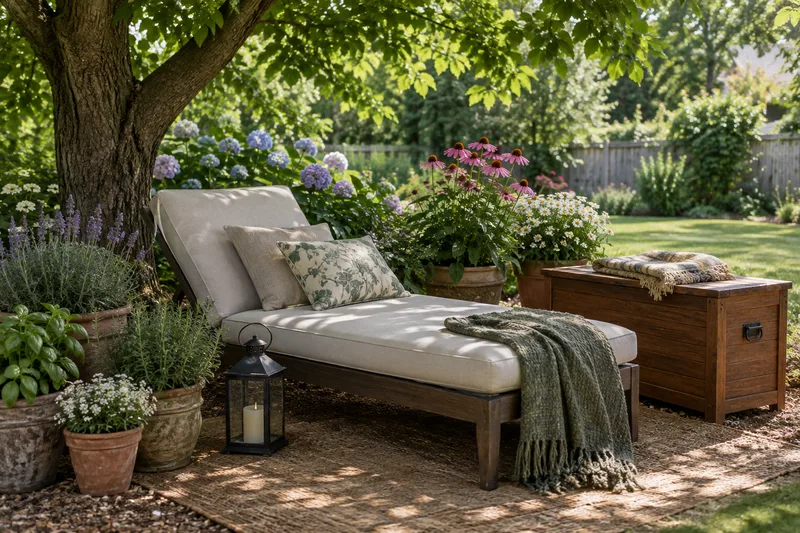
The best shade trees for a yard are large, sturdy deciduous trees that suit your USDA zone. Strong choices include northern red oak, swamp white oak, red maple, sugar maple, thornless honeylocust, black gum and male ginkgo trees. In a small yard, American hornbeam, Japanese tree lilac and paperbark maple give shade on a smaller scale. The tables below list each tree's mature height, spread and zones.
A good shade tree is a long-term choice. It should fit the space when fully grown, keep its branches in storms and drop as little mess as possible near the patio. This guide covers all three, plus fast growing shade trees and the best shade trees by zone. For more on choosing trees of every kind, see our Trees for Landscaping guide.
Best shade trees for yards: size and zones
All figures come from the NC State Extension Gardener Plant Toolbox. Sizes are mature ranges for the species; named varieties may differ.
| Tree | Height (feet) | Spread (feet) | USDA zones | Growth rate | Good to know |
|---|---|---|---|---|---|
| Northern red oak (Quercus rubra) | 50 to 70 | 50 to 75 | 4 to 8 | Rapid | Brownish-red to scarlet fall color; acorns |
| Swamp white oak (Quercus bicolor) | 50 to 60 | 50 to 60 | 4 to 8 | Medium | Native; small acorns in fall |
| Willow oak (Quercus phellos) | 40 to 75 | 25 to 50 | 5 to 9 | Rapid | Used as a shade or street tree |
| Red maple (Acer rubrum) | 40 to 70, can reach 120 | 30 to 50 | 2 to 9 | Rapid | Shallow roots can buckle paving |
| Sugar maple (Acer saccharum) | 40 to 120 | 30 to 60 | 3 to 8 | Slow | Red, orange or yellow fall color |
| Thornless honeylocust (Gleditsia triacanthos var. inermis) | 60 to 80 | 60 to 80 | 3 to 8 | Rapid | Light shade; drops pods |
| Ginkgo, male trees (Ginkgo biloba) | 50 to 80 | 30 to 40 | 3 to 9 | Medium | Golden yellow fall color |
| Black gum (Nyssa sylvatica) | 40 to 70 | 20 to 35 | 4 to 9 | Medium | Scarlet fall color; often 20 to 30 feet in gardens |
| American linden (Tilia americana) | 60 to 80 | 30 to 60 | 3 to 8 | Medium | Fragrant flowers; not for urban conditions |
| Kentucky coffeetree (Gymnocladus dioicus) | 60 to 80 | 40 to 55 | 3 to 8 | Slow | Tolerates drought, pollution and flooding |
| Hackberry (Celtis occidentalis) | 40 to 60, can reach 100 or more | 40 to 60 | 3 to 9 | Rapid | Tolerates wind and urban conditions |
| River birch (Betula nigra) | 30 to 70 | 40 to 60 | 4 to 9 | Rapid | Drops many twigs |
Oaks and maples are the classic shade trees. For lighter, filtered shade, choose thornless honeylocust, which NC State describes as casting light shade. Plant ginkgo only as a named male variety, because female trees bear foul-smelling seeds.
Fast growing shade trees
Several good shade trees grow fast without weak wood. NC State rates these as rapid growers:
- Red maple, zones 2 to 9, the widest zone range on this list.
- Northern red oak, zones 4 to 8, a fast oak that spreads 50 to 75 feet.
- Willow oak, zones 5 to 9, used as a shade or street tree.
- Thornless honeylocust, zones 3 to 8. NC State notes its wood is hard.
- Hackberry, zones 3 to 9, which tolerates wind and urban conditions.
- River birch, zones 4 to 9, though it drops many twigs and sheds inner leaves in summer drought.
Speed has a cost with some trees. NC State says silver maple wood "is weak and breaks easily in storms and with snow loads." Weeping willow's rapid growth comes with weak wood that cracks in snow or ice. Tulip tree has weak wood that can break in high winds or ice, and it can reach 80 to 120 feet. Keep these well away from the house, or choose a sturdier tree from the list above.
Shade trees for small yards
A small yard still has room for shade. Choose a tree that stays near 30 feet tall, and place it where shade helps most, such as over a patio. These shade trees for small yards suit tighter spaces:
| Tree | Height (feet) | Spread (feet) | USDA zones | Why it works |
|---|---|---|---|---|
| American hornbeam (Carpinus caroliniana) | 20 to 30 | 20 to 35 | 3 to 9 | Tolerates deep shade; orange-red fall color |
| Japanese tree lilac (Syringa reticulata) | 25 to 30 | 15 to 20 | 3 to 7 | Blooms in June; reddish brown peeling bark |
| Paperbark maple (Acer griseum) | 20 to 30 | 15 to 25 | 4 to 8 | Bark peels in papery curls; orange and red fall color |
| Kousa dogwood (Cornus kousa) | 20 to 30 | 15 to 30 | 5 to 8 | Flowers about a month after flowering dogwood |
| Eastern redbud (Cercis canadensis) | 20 to 30 | 25 to 35 | 4 to 9 | Wide crown; pink to purple spring flowers |
Black gum is another option where there is a little more room, since NC State notes it typically reaches 20 to 30 feet in cultivation. For more small trees with flowers, see Small Ornamental Trees for Front Yards.
Best shade trees by zone
USDA zones are based on the lowest winter temperatures, so they tell you which trees survive your winters. This table groups the trees above by the zones their ranges cover.
| Your zone | Shade trees that fit |
|---|---|
| Zones 2 to 3 | Red maple (from zone 2); sugar maple, honeylocust, ginkgo, American linden, Kentucky coffeetree, hackberry, American hornbeam and Japanese tree lilac (from zone 3) |
| Zones 4 to 5 | All of the above, plus northern red oak, swamp white oak, black gum, river birch, paperbark maple and eastern redbud; willow oak and kousa dogwood from zone 5 |
| Zones 6 to 7 | Every tree in both tables |
| Zone 8 | Every tree except Japanese tree lilac (to zone 7) |
| Zone 9 | Red maple, willow oak, ginkgo, black gum, hackberry, river birch, American hornbeam and eastern redbud |
A zone rating covers winter cold, not summer heat. A tree at the warm end of its range may struggle in long, hot summers. Your county extension office can suggest the trees that do best locally.
Where to plant a shade tree
Plant for the tree's mature spread. A tree with a 60-foot spread reaches about 30 feet from its trunk.
- Distance from the house: University of Wisconsin Extension advises planting trees 15 to 25 feet from the house. Large shade trees need the far end of that range.
- Power lines: the Arbor Day Foundation advises placing trees to avoid collisions with power lines and buildings.
- Paving: NC State warns that red maple's shallow roots may buckle sidewalks or driveways planted too close.
- Patios and cars: keep trees that drop pods, nuts or spiky fruit, such as honeylocust and sweetgum, away from seating and parking.
- Gardens: black walnut contains juglone, which inhibits some plants beneath it, so keep it away from beds.
Shade changes what grows underneath. For plants that cope with roots and low light, see Plants for Dry Shade Under Trees.
Common questions about shade trees
What is the fastest growing shade tree?
NC State rates red maple, northern red oak, willow oak, thornless honeylocust, hackberry and river birch as rapid growers. It does not name a single fastest tree. Avoid choosing on speed alone, because some fast trees have weak wood.
What is the best shade tree for fall color?
Black gum turns scarlet, ginkgo turns golden yellow, and sugar maple turns red, orange or yellow, according to NC State.
How do I choose between two shade trees?
Start with your zone, then compare mature spread with the space you have. If both fit, choose the one with stronger wood and less litter near where you sit or park.
Which shade trees should I avoid near the house?
Silver maple, weeping willow and tulip tree have weak wood, and sweetgum drops spiky fruit. Our Trees for Landscaping guide lists more trees to avoid near houses.
More guides on Yard and Soil
- Trees for Landscaping: shade, privacy and ornamental trees with sizes and zones.
- Fast-Growing Privacy Trees: evergreen screens for year-round privacy.
- Small Ornamental Trees for Front Yards: dogwood, redbud, serviceberry and more.
- Plants for Dry Shade Under Trees: what to plant beneath a shade tree.
- Shade Garden Ideas: ideas for the cool space your tree creates.
Sources
- NC State Extension, Extension Gardener Plant Toolbox: northern red oak, swamp white oak, willow oak, red maple, sugar maple, honeylocust, ginkgo, black gum, American linden, Kentucky coffeetree, hackberry, river birch, American hornbeam, Japanese tree lilac, paperbark maple, kousa dogwood, eastern redbud, silver maple, weeping willow, tulip tree, sweetgum and black walnut.
- Dan Wilson, Thomas Wilson and Wayne Tlusty, University of Wisconsin Madison Division of Extension, Selecting Landscape Plants.
- Arbor Day Foundation, Planning, Selection, and Location.